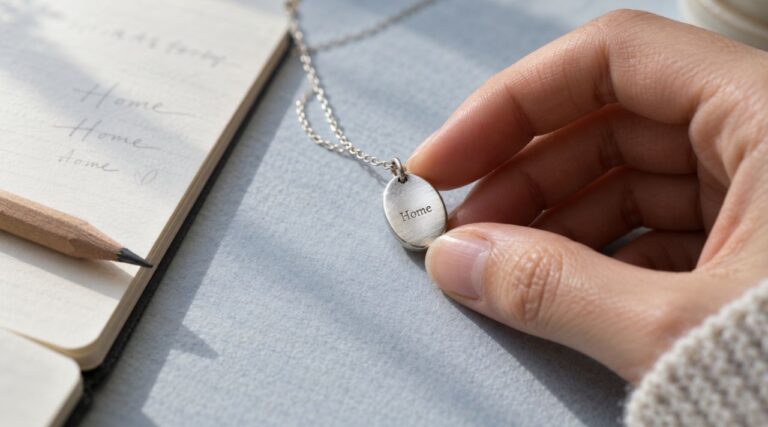
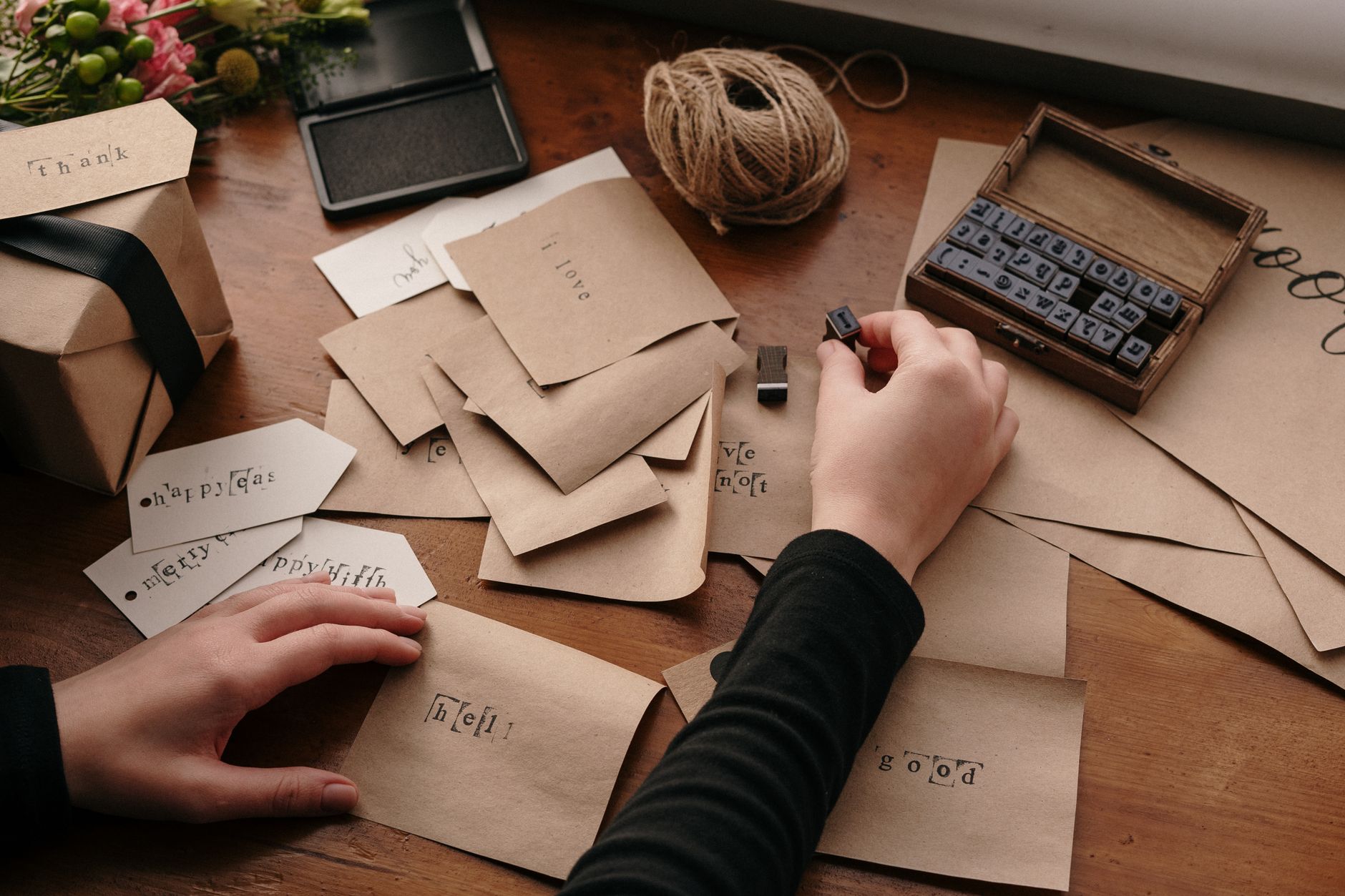

You have found a gift that seems right. Then the order page offers one more choice: add a name, a date, a photograph, or a few engraved words. Would that detail make the gift more meaningful – or simply more difficult to get right?
Personalization adds meaning when the detail matters to the recipient, the gift fits their life, and the message feels comfortable within the relationship. A name can make something easier to identify. A familiar phrase can recall a friendship. Neither automatically makes an unsuitable object a better gift.
The decision becomes easier when you consider the person before the customization options. Think about what they enjoy now, which memories they like returning to, and whether they prefer to keep personal things private. Sometimes an inscription is a lovely choice. Sometimes the same words belong in a card, where they can be kept without changing the gift itself.
Personalization Adds Meaning When the Detail Matters to the Recipient
Choose a Memory They Value, Not Just One You Remember
Before turning a memory into a gift, consider whether the other person enjoys remembering it too. Have they brought it up themselves? Do they keep a photograph from that day? Do they speak warmly about the place or experience?
Imagine two friends who took a walking holiday together. One repeatedly mentions the little town where they sheltered from the rain and spent an afternoon talking. A small print of that town could recall something both friends value.
A map of the entire route might be less fitting if the other friend mostly remembers sore feet and wanting to go home.
With custom map gifts, the location should earn its place through the recipient’s connection to it. A birthplace, former address, or wedding venue is not automatically the right choice simply because it belongs to their biography.
You do not need a major milestone. An ordinary place can carry a warm memory. What matters is having a reason to believe the memory is welcome.
Reflect Their Current Interests Rather Than an Outdated Picture of Them
Personalization can accidentally preserve a version of someone they have moved beyond. A person who once collected owl ornaments may no longer want another owl on their desk, even with their name underneath it.
Look for recent clues: something they use regularly, an interest they mention without prompting, or a style they choose for themselves.
An old interest can still be meaningful, but check that it remains part of their present life before making it the theme of a permanent object.
If you are starting with personalized gifts, remember that the personal element can be a choice of color, format, or useful feature. Visible names and photographs are only some of the options.
The Personal Touch Works Better When They Understand Why You Chose It
Explain the Connection Between the Detail and Your Gift
In a 2024 study, researchers examined customized gift exchange across four experiments.
Recipients showed greater appreciation for customized gifts through what the authors call vicarious pride: sharing in the pride associated with the giver’s creative contribution. The paper identifies communicating the customization as a practical implication.
That does not mean every engraved object produces this response. The experiments studied particular gift situations, not every occasion or relationship.
They also found a boundary involving relationship anxiety, so customization should not be presented as a way to repair an uncertain relationship.
In practice, you can make the connection clear with one specific sentence. For the hypothetical walking-holiday gift, the note might say: “I chose this town because that rainy afternoon is one of my favorite memories of our trip.”
This explains the choice and gives the recipient room to remember it in their own way.
Let the Explanation Show Your Attention Without Asking for Praise
There is a difference between sharing why you chose a detail and explaining how much trouble it caused you. “I remembered you saying you wanted a notebook that fits your coat pocket” tells the recipient what you noticed.
A long account of the shops you visited or the hours spent arranging the lettering shifts attention toward your effort – and may leave them searching for a sufficiently grateful response.
The same research separated the customization effect from the time and effort involved in the process. It does not support a simple rule that more work always produces more appreciation.
Keep your explanation about the connection. Once you have given the gift, allow their response to be their own. A quiet thank-you does not tell you everything about what the gift may mean to them.
Personalization Cannot Make Up for a Gift They Would Not Want
Choose the Right Object Before Adding a Name or Message
Ask yourself: would this still be a reasonable gift if the personalization were removed? For an item intended for everyday use, consider size, material, care requirements, and the way the person already does things.
A beautifully engraved travel mug may be awkward for someone who likes drinking from a small ceramic cup at home. A large photo display may be difficult to place in a small apartment.
A keepsake does not have to be practical in the same way, but the person still needs to want that kind of keepsake. Do they enjoy displaying photographs or wearing jewelry? Have they said they are trying to own fewer things?
This also makes meaningful gifts on a budget easier to choose: spend on an object that suits the person before paying for extra decoration.
If customization makes the suitable version unaffordable, a personal note can carry the connection instead.
Keep Personal Details Private If They Would Not Want Them on Display
Where a detail appears can matter as much as what it says. A nickname on the front of a work bag will be seen by colleagues and strangers. The same nickname inside a card stays within the recipient’s control.
-
A private joke
Would they enjoy explaining it to other people? If you are unsure, write it in the accompanying card rather than on an object they will use in public.
-
A family photograph
Do they want that image displayed? A small print offered separately lets them choose whether and where to frame it.
-
A personal message on jewelry
Would they want other people to read the words? An inside inscription may suit someone who wants a private reminder, provided they welcome the inscription itself.
These are prompts for judgment, not a rule that private details must always be hidden. Some people love a visible reminder. Others prefer something only they know is there.
Ask First When a Detail Could Be Wrong, Unwelcome, or Too Intimate
Confirm Names, Dates, and Sensitive Memories Before Making Them Permanent
Use the name the person actually wants on the object. Do not assume a legal name, married name, nickname, or spelling from an old social profile is their preference.
Dates also need context: the day a couple met may matter more to them than the date you remember celebrating.
For a memorial or another sensitive subject, accuracy is only one consideration. An image can be correct and still be difficult to receive unexpectedly.
If you are unsure, ask whether they would welcome a keepsake connected to that person or event before ordering it.
A question such as “Would you like something with this photograph, or would you rather keep it as a print?” offers a real choice. Accept the answer without persuading them to appreciate the idea.
Check the final proof against confirmed information, including punctuation and layout. If you discover a wrong name on a personalized order, contact the seller promptly to ask whether production can still be changed.
Whether a correction is possible depends on the seller and the stage of the order.
Use Lighter Personalization When You Do Not Know Their Preferences Well
Knowing a fact about someone is different from knowing they would welcome it on a gift. A new colleague may have mentioned their hometown, but that does not necessarily mean they want a large hometown print for their home.
Subtle personalized gifts can acknowledge something the person has freely shared without suggesting a level of intimacy you have not established.
For example, choosing a notebook in a color they often use may be enough. There is no need to add their full name, job title, and a message about your friendship.
Closeness does not remove the need to consider preferences either. A close relative who dislikes personalized décor still dislikes it. Let what you know about the person guide the choice more than the relationship label.
Personalize When You Are Confident; Keep the Message Removable When You Are Unsure
Add the Detail When Its Meaning, Use, and Visibility Fit the Recipient
Check these four things before you approve the design. An uncertain answer shows you what still needs attention.
- 01Meaning
You have a reason to believe the detail matters to the recipient, based on something they have said, chosen, or welcomed.
- 02Fit
They would welcome the object or keepsake itself. The personalization is not being used to compensate for an unsuitable gift.
- 03Visibility
They would be comfortable with where the detail appears and who can see it.
- 04Accuracy
The name, date, wording, and final proof have been checked against confirmed information.
If those answers are clear, choose the simplest version that carries the meaning. Short engraving messages can leave room for the object to remain something the recipient enjoys wearing or using.
You do not need to fit the entire story into the available space.
Ask a Focused Question – or Put the Personal Message in a Card
If one answer remains uncertain, decide whether a small question would resolve it. Ask about the spelling, the photograph, or the preference that is holding you back.
If you cannot check, keep the uncertain detail off the permanent object. Put your words in a card, add a removable tag, or give the photograph separately. The recipient can keep the message privately and choose how to use the gift.
A gift does not need to carry someone’s name to show that you paid attention. The meaningful part is the connection they can recognize – and the care you took to make room for their preferences.