
The photo you love most may not be the one they want to keep.
When a picture becomes a gift, the person receiving it gets a say – even if they never helped choose it. The most useful question is not simply “Is this a good photo?” but “What will this picture mean to them, and will they feel good keeping it?”
Here is a practical way to choose without turning your camera roll into a contest for the prettiest shot.
A Photo I Disliked of Myself Was the One My Friend Loved
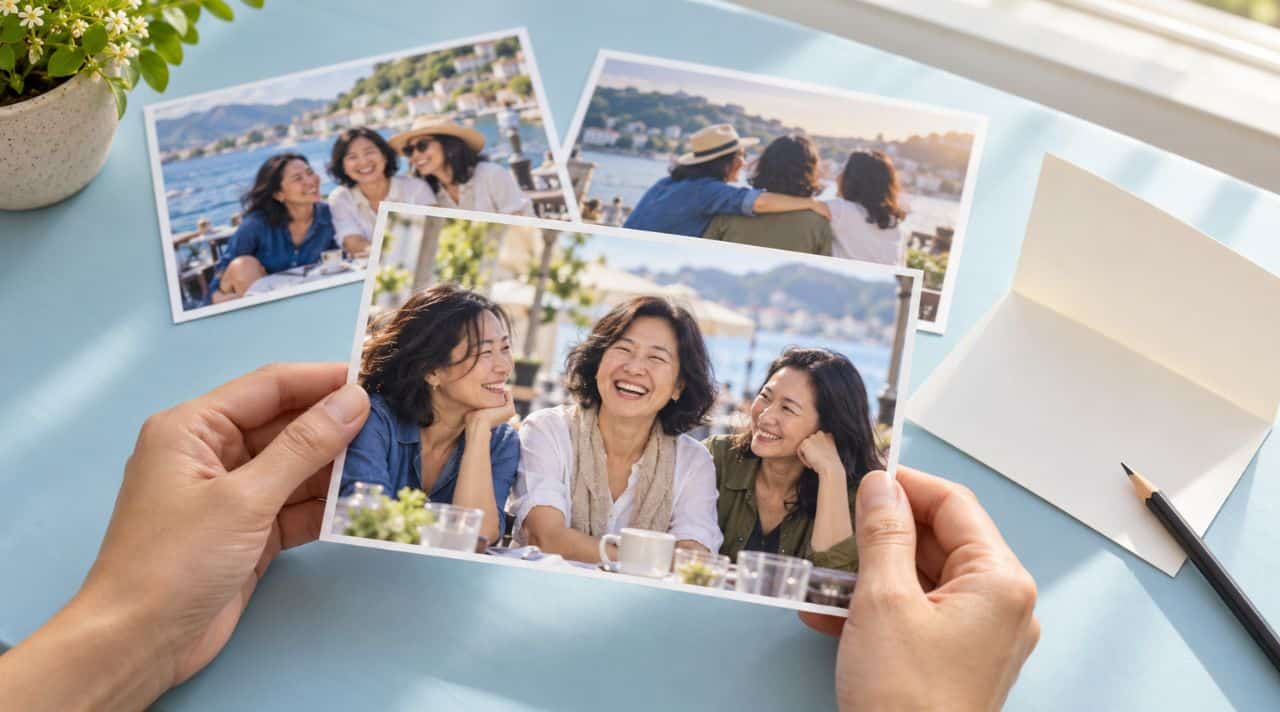
I once chose a group photo as a gift for a friend I care about deeply. I wasn’t happy with how I looked in it, and it wasn’t a picture I would have wanted to display myself.
But I already knew she loved that exact photo. She looked lovely in it, and I liked the thought of seeing her smile when she looked at herself in the picture.
So I gave it to her anyway. Not because I suddenly liked how I looked, or because my feelings about the photo didn’t matter, but because I cared about her. I wanted her to have something that made her happy.
That experience reminded me that choosing a photo as a gift isn’t always about finding the picture you think is best. Sometimes it’s about knowing which picture brings someone you love a little joy – and being glad to give them that.
Look for Evidence That the Memory Belongs to Them
A recognizable memory usually beats a generic beautiful scene. Think of the old kitchen table, a dog asleep under a chair, or a particular afternoon together.
The important detail is not necessarily the most visually impressive part of the frame; it’s the part they would notice and remember.
- They have shown they like it
If they have told you they like a particular picture, that is stronger evidence than your own preference.
A promising signThey have said they like this particular image.Pause ifYou only know that you personally love it. - The moment is recognizable to them
A familiar place, expression, person, or small detail can carry the memory.
A promising signThey could connect it to a moment without a long explanation.Pause ifThe meaning depends entirely on a story only you know. - The image respects their comfort
Consider expressions, other people in the frame, and who may see the finished gift.
A promising signThey are likely to welcome the image in the intended setting.Pause ifIt exposes a private or painful moment without their agreement.
If the strongest memory is a place rather than a usable photo, a gift built around a meaningful location may express it better. A photograph is one way to preserve a memory, not the only way.
When a Meaningful Photo Might Still Be the Wrong Gift
A picture can feel affectionate to the person who took it and uncomfortable to someone in it.
Before printing, look beyond the main subject: does it include an ex-partner, a child whose photo should stay private, or someone connected to a difficult period?
A photo of a person who has died can be precious, but the recipient’s grief and timing matter.
| If the photo… | A more considerate choice |
|---|---|
| Shows a moment they enjoy but would not display publicly | Give a small print in a card or a private album rather than wall art. |
| Includes someone whose presence may upset them | Choose a different frame or ask quietly before making it a surprise. |
| Features your own image in a way you genuinely do not want shared | Respect your boundary; choose another photo or another personal gesture. |
| Brings back a loss or sensitive occasion | Check whether a photo gift would be welcome; do not assume a memorial image is always comforting. |
You can ask about the occasion without revealing the whole gift: “Would you feel comfortable having a photo from that day printed?” If asking itself could cause distress, choosing a gentler memory is reasonable.
Turn a Crowded Camera Roll Into a Shortlist
-
Search by one occasion
Use a date, trip, person, or place to find a manageable set instead of scrolling through years of photos.
-
Save different kinds of memories
Keep a shared moment, a picture where they look comfortable, and perhaps a meaningful place or small detail. Do not save five nearly identical poses.
-
Remove near-duplicates
Compare expressions and what the recipient would recognize. The tidiest composition is not automatically the best gift.
-
Keep three or four finalists
Put them side by side. You should be able to say why each one might matter to the recipient.
For example, from a weekend away you might keep a relaxed group shot, the view you both stopped to admire, and a funny detail from dinner. These are three different memories, not just three versions of the same pose.
Let the Way They Will Keep It Break the Tie
Once you have finalists, the format can help you decide. A framed picture asks for space in someone’s everyday life; a print tucked into a card gives them control over when to revisit it.
An album can hold several moments without asking any single image to represent the whole relationship.
| Gift format | Photo choice that tends to fit | Check before deciding |
|---|---|---|
| Framed print | A moment they would enjoy seeing often | Would they want it visible in their home? |
| Print inside a card | A private, funny, or intimate shared memory | Does a short note help explain its meaning? |
| Small album or photo book | Several different moments that tell a story together | Are you choosing variety rather than duplicates? |
| Mug, calendar, or other everyday item | A picture they would not mind others seeing | Could the image feel too personal for a public object? |
If the picture will become a visible object in their home, the next question is how to choose a photo gift that looks at home on display. That is different from deciding which memory is worth sharing.
Make the Final Choice – Then Check the File
Put your finalists side by side. First, remove any photo that could make the recipient uncomfortable.
Next, favor the one they have actually shown affection for, or the one with the clearest connection to their experience. If two remain, choose the one that suits the gift format with the least awkward cropping.
A slightly imperfect photo may be the right one. A short handwritten line can help explain an ordinary-looking detail, but it cannot make an unwanted or revealing picture appropriate.
And the most meaningful image still needs to survive the printing process: before ordering, use the photo print-readiness guide to check the original file, size, and crop.
The right photo gift begins with the recipient, not with a ranking of the most flattering shots in your camera roll. Look for a memory they recognize, evidence that they welcome the image, and a format that respects how privately or publicly they may want to keep it.
My friend loved a group photo I would not have chosen for myself. Knowing she liked it helped me choose a picture for her, despite my own misgivings about how I looked. If no image passes that test, another way to make a gift personal may be the more thoughtful choice.