

A personalized gift uses a detail that belongs to the recipient or the relationship. The detail may be a name, photograph, place, date, phrase, recipe, or piece of handwriting – but adding one does not automatically make the gift meaningful.
What are personalized gifts in practice? They are ordinary objects or experiences changed for a particular person. The change works when the recipient immediately understands the connection and still likes the object itself. It fails when the giver chooses a detail simply because an order form has an empty box marked ‘Add text.’
The useful question is not how much customization can fit. It is which single detail deserves to stay.
Begin with the person, not the product
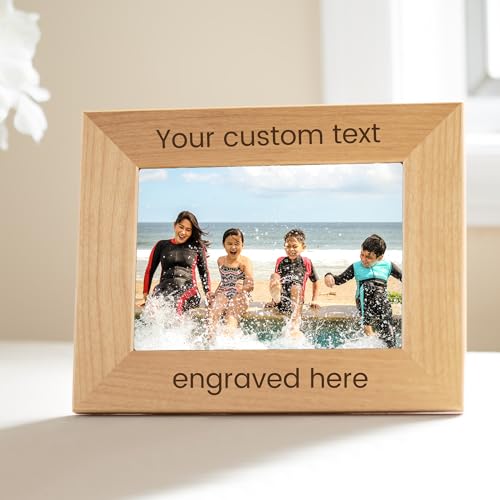
Personalization earns its place when it points to something real: the beach where two friends still laugh about getting soaked, a recipe written by the person who always made it, or the nickname the recipient actually uses. It is not a test of how many facts the giver has collected.
That distinction matters because many personalized gift ideas begin backward. A shopper finds a mug, necklace, board, blanket, or map and then searches for something to put on it. Starting with the person produces a better order: first choose the connection, then decide whether any object can carry it without looking forced.
Choose a detail that belongs
A good detail is easy for the recipient to recognize and comfortable for them to keep. It may recall a shared moment, reflect an established interest, or preserve something they already value. The question of when personalization makes a gift meaningful becomes easier when you ask whether this person would welcome this detail on this object.
Use one clear reason for the choice. “This is the recipe you taught me” is enough. So is “This was the view from our first trip.” A design crowded with five dates, three quotations, two nicknames, and a row of symbols often asks the recipient to admire the work rather than feel the connection.
Imagine the item without the custom name, photograph, or date. If it would still suit the recipient, the personal detail is adding meaning. If the object would otherwise be useless or unwanted, customization is hiding a weak choice.
Keep the intimacy in proportion
The right amount of detail depends on the relationship. A spouse may welcome a private phrase. A personalized gift for someone you barely know should use only information the recipient has shared openly, such as a preferred name or a familiar interest. Details collected from relatives, workplace records, or old social posts do not become thoughtful simply because they fit inside an engraving box.
Also consider where the item will live. A family photograph may feel right in a private album and uncomfortable on an office desk. A joke that works between two people may become embarrassing when printed on something seen by a whole household. Personalization should not volunteer the recipient’s private life for display.
When the gesture feels too intimate, expensive, or loaded with expectation, basic gift-giving etiquette still applies: consider the relationship, the occasion, and the pressure the recipient may feel. Sometimes the considerate correction is a smaller detail. Sometimes it is an ordinary gift. Sometimes it is no object at all.
Match the memory to a form that can carry it
Different types of personalized gifts place different limits on the detail. A photograph needs enough room to remain readable. Engraving needs short text and a suitable surface. A map needs a place the recipient will recognize. Handwriting needs enough contrast and scale to keep the original character. The object is not a neutral container; it changes what survives.
Photographs need meaning and enough visual information
A technically perfect photograph can still be the wrong gift. When you choose photos for gifts, begin with a moment the recipient remembers fondly, people they are comfortable displaying, and a setting that makes sense without a long explanation.
To decide whether a photo is good enough to print, open the original file rather than a screenshot or a copy saved from a messaging app. Zoom in on faces, examine dim areas, and check whether the product shape will crop out a person, hand, pet, or landmark at the edge.
The display space matters too. A busy collage may overwhelm a small desk frame, while one close portrait can feel lost on a large blanket. For custom photo gifts that will be displayed, leave breathing room around the image and choose a finished size that will not require the recipient to rearrange a room.
Short text has to survive the surface
Engraving is permanent, but that does not make a long message more important. On a pen, pendant, watch back, or key ring, short engraving ideas are easier to read than a dedication squeezed into hair-thin lettering. The wording should sound like the people involved, not like a quotation catalogue.
Names and initials need slower checking than they seem to deserve. Confirm spelling from a reliable source and keep every accent mark. Always check the order of monogram initials, because some designs place the family-name initial in the center while others read straight from left to right.
Handwriting should remain recognizable
Handwriting carries its meaning through small irregularities: the slant, spacing, uneven baseline, or unusual way a letter closes. Start with a clean scan or a straight, evenly lit photograph. Remove the paper background and obvious dust, but keep the strokes that make the writing recognizable.
A whole letter rarely belongs on a small pendant. For personalized jewelry with handwriting, choose a signature, two or three words, or one short line that remains legible at the finished size. Product photographs should show the actual scale on a person, not only an enlarged mockup.
Places and recipes need a life beyond the reveal
A location becomes personal when the recipient understands why it matters. Before deciding whether a custom map gift is worth it, check that the place is recognizable, the label is accurate, and the finished piece suits the recipient’s space.
A family recipe has another decision hidden inside it: use or preservation. A handwritten recipe cutting board can preserve the original writing, but daily chopping may slowly mark the engraved face. Decide before ordering whether the board will be displayed, used on the reverse, or reserved for serving.

Review the real object before approving the idea
Treat the preview as the finished gift
Read the personalization aloud, one character at a time. Compare names, dates, punctuation, capitalization, line breaks, and initials with the original source – not with memory. Write ambiguous dates with the month spelled out. If the preview does not show the exact layout, ask what will be printed or engraved before paying.
Check the order in the places mistakes usually hide:
- Words: Verify every character, accent mark, date, monogram position, and line break. When the wording cannot be replaced, ask another person to compare the preview with the source.
- Image: Use the original file, inspect faces at full size, and confirm that every important person or landmark remains inside the crop.
- Object: Read the finished dimensions, material, color, orientation, and care instructions. Listing photographs can make a small item look generous and a large item look conveniently compact.
- Terms: Note the production window, delivery estimate, cancellation cutoff, return limits, and correction policy. Save the approved preview and order confirmation.
Personalized work often becomes difficult to change once production starts. Five quiet minutes now are worth more than an urgent email tomorrow.
Leave time and evidence for corrections
Order early enough to inspect the item before the occasion. When it arrives, compare it with the saved preview before removing labels, washing fabric, trimming a print, or attempting a repair. Changing the item yourself may make the original problem harder to document.
If you find a wrong name on a personalized gift order, photograph the item, packaging, and label before changing anything. Contact the seller promptly, compare the mistake with the saved preview, and ask which correction route is available.
Let the handoff stay simple
A short sentence can supply the missing context: “I chose this photo because that afternoon still makes me laugh,” or “I wanted to keep Grandma’s handwriting where the family could see it.” Then stop. The recipient should not have to admire the research, expense, or trouble behind the order.
Presentation should protect the object and make it easy to open, not compete with the personal detail. Simple gift wrapping ideas can cushion a fragile edge or cover an awkward shape, while one short note can explain why the chosen detail matters. Keep the result tidy enough to feel finished and simple enough that the gift remains the point.
Meaningful personalized gifts do not prove that the giver knows everything about someone. They show that one true detail was noticed, checked, and placed where it belongs. That is usually enough. In fact, it is often better than enough.
- Choose one detail the recipient recognizes and welcomes.
- Match that detail to an object they can use, wear, or display comfortably.
- Approve the real dimensions, crop, wording, and terms – not the listing’s mood.
What are personalized gifts at their best? They are suitable gifts made more specific by one honest connection. The object still fits; the detail still reads; and the recipient is not asked to carry more intimacy, clutter, or obligation than the relationship can hold.
