
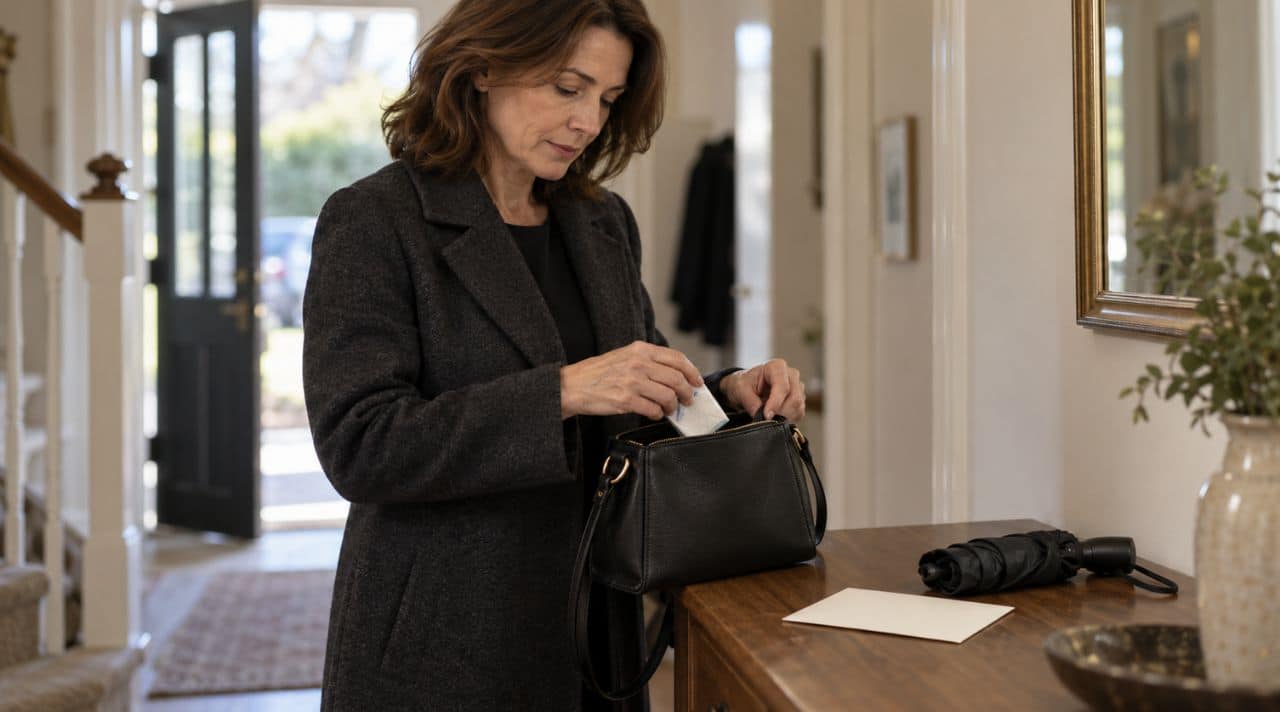

For most funeral guests, there is no need to bring a gift. Bring tissues, a small bag with your essentials, and anything the family has specifically requested. A sympathy card is optional; flowers and food need a little more planning.
If you are standing by the door wondering whether arriving empty-handed will look uncaring, read the service notice before buying anything. Family instructions and the customs of this particular service matter more than a general funeral checklist.
Read the notice before you pack
Start with the obituary, invitation, funeral home page, or message from the organizer. Look for “in lieu of flowers,” a charity name, a dress request, whether there is a reception, and whether guests have been asked to contribute anything.
Check which event you are attending: the service, a visitation, a graveside gathering, and a meal afterward may have different arrangements.
If the notice says nothing about gifts, do not treat the silence as an assignment. In many services, your role is simply to attend, acknowledge the loss, and follow the proceedings.
Arriving with no gift can be entirely appropriate. If you know the family observes a particular mourning custom, check that custom instead of assuming this general guidance settles it.
When you need an answer about objects or logistics, contact the funeral home or organizer first. They can often explain flower delivery, reception contributions, and where cards go without making the closest relative manage another conversation.
Ask a narrow question: “Are guests bringing food to the reception, or is it already catered?” is easier to answer than “What should I bring?”
This also helps when you are attending for a colleague rather than a close friend. Your workplace may already have arranged a card or collection.
Coordinate before adding another gesture; the guide to supporting a bereaved colleague respectfully covers that boundary in more detail.
What to bring as a funeral guest
Pack for the length and setting of the day. You may spend time standing, walk from a car park to a graveside, or move between several locations. A modest bag you can keep beside you is usually easier than several separate things to carry.
Tissues and personal necessities. Bring a small pack of tissues, any medication or other essentials you normally need, and your glasses if you use them to read.
Put the tissues somewhere you can reach without searching through your whole bag. You do not need to prepare a kit for everyone in the room.
Weather protection. For an outdoor burial or memorial, check the forecast and bring a suitable coat, a manageable umbrella, or other protection you need.
Choose shoes that work on the ground you will actually cross. Water for yourself may be useful on a long or hot day; check venue rules and keep it put away during the service unless you need it.
A sympathy card, if you want to bring one. A few sincere lines are enough. Sign with your full name and, when helpful, explain your connection to the person who died.
“I worked with Daniel at the library. I will remember how patiently he helped every new member of staff” gives the family something specific to hold onto.
Use a designated card basket or ask an usher where cards should go. Avoid interrupting a conversation to insist that the family open yours.
If there is no easy place to leave it, mailing it afterward is fine. Do not carry a card solely because you feel you need an object to justify being there.
Your phone, turned off or properly silenced. Check alarms and other alerts before sitting down. Emily Post’s funeral service guidance recommends turning a phone completely off, including vibration.
If you genuinely need to stay reachable, sit where you can leave quietly and take any necessary call outside.
Should you bring flowers to a funeral?
Flowers may be welcome, but being welcome does not automatically mean you should walk in carrying a bouquet.
Someone has to find a place for it, deal with water or packaging, and decide where it goes after the service. Check the family’s wishes first, then the delivery arrangements.
- The family has requested donations instead
Honor the request. Use the named charity or the instructions in the notice rather than substituting flowers because they feel more traditional.
- Flowers are welcome at the service
Ask the funeral home about the correct location, delivery window, and a suitable arrangement. Include your name so the family knows who sent it.
- You want to give flowers personally
Check whether a small arrangement is wanted and where it should go. A separate home delivery may be easier, but confirm that it is welcome too.
There is no universal rule that every funeral guest should bring flowers. Religious practice, family preference, and venue arrangements can change the answer.
If you are unfamiliar with the service, ask the organizer rather than guessing from a generic list of “appropriate” blooms.
If you arrive without flowers and later decide to send them, you have not missed your only chance. The guide to sending sympathy flowers after the funeral explains how to make a later delivery considerate.
When flowers would be unwelcome or inconvenient, there are other gifts to consider in place of flowers. Neither choice needs to become a last-minute purchase on the way to the service.
Food belongs where someone can receive it
Food can be genuinely helpful. The difficulty is bringing it to the wrong place, at the wrong time, with nobody expecting it. A dish for a planned reception and a meal for the family’s home are two different offers.
For a funeral reception: join the plan
If guests have been invited to contribute, contact the person organizing the meal. Ask what is still needed, roughly how many people your contribution should serve, and when and where to drop it off.
A requested tray of sandwiches is more useful than a surprise casserole when the main meal is already covered.
Explain what you are bringing, including ingredients the organizer needs to know about. Check whether it requires refrigeration, reheating, cutting, or serving utensils.
Bring it in a container you can leave behind, or make clear how you will collect your own dish. Avoid turning the host into the person responsible for tracking borrowed cookware.
If no contribution has been requested, do not assume there will be a potluck. A reception may be catered, held at a restaurant, or restricted by the venue. In that case, attend as a guest and save the meal offer for another day.
For the family’s home: agree on a delivery
Offer something concrete: “I can drop off dinner for four on Tuesday at six. Would that help, and are there any foods I should avoid?” A specific offer makes the decision smaller. If they decline, accept the answer without asking them to reassure you.
Keep the portion manageable, label what is inside, and include simple storage or reheating instructions when needed.
Arrange suitable transport for perishable food; do not plan to leave it waiting in a car throughout the service. Drop it off at the agreed time, without expecting to be invited in or receive a detailed response.
A meal is not always the right help. The family may already have a full fridge, visitors bringing food, or dietary needs you cannot easily accommodate.
If you want to offer something later, these practical items for a grieving friend can help you think beyond another dish.
What to leave at home – or arrange separately
Leave out things that require the family to make decisions during the service. A gift can be well meant and still create work when someone must carry it, display it, find a place for it, or thank you while greeting other guests.
Large gifts and surprise keepsakes. Framed photographs, memorial ornaments, large plants, and gift baskets are better discussed or sent separately.
If a photo table has been requested, bring the agreed photograph in the requested format. Do not assume an unrequested object will be added to the display.
Uncoordinated food or drinks. This includes alcohol. Follow a reception invitation or the organizer’s request; do not infer that a celebration of life needs bottles of wine. Even something as simple as a tray of cookies needs a place to go.
Strong fragrance and distracting extras. Go easy on perfume or cologne in a room where people may sit closely together. Keep noisy packaging, musical cards, and conspicuous items out of the service.
A camera does not need to come unless you have been asked to take photographs; a phone camera is not an exception to asking permission.
A donation that depends on a public handover. If a charity is named, follow its donation process. If the family’s custom includes money or a collection, use the stated arrangements.
Do not assume cash is either required or inappropriate everywhere, and do not announce an amount to the bereaved family.
The same principle applies to what you say. You do not need a long speech, an explanation of the death, or advice about how someone should grieve.
“I’m so sorry. I’m glad I could be here” can be enough. If you have a memory to share, follow the family’s pace rather than keeping them in a conversation when others are waiting.
Memorial services and celebrations of life
A memorial service or celebration of life may ask guests to bring something a conventional funeral does not: a photograph, a written memory, a favorite recipe, or an item linked to the person’s interests. Follow the actual invitation. The event’s name alone does not tell you what to pack.
For a requested photograph, check whether the organizer wants a printed copy or a digital file. Use a copy you are comfortable leaving behind, and label it if the people or occasion may not be obvious.
If you are asked for a written memory, a short, specific story will usually be easier to collect and share than several pages.
A clothing request belongs in this same category. If the family asks for a favorite color, team shirt, or casual dress, honor that rather than insisting on black.
Without specific guidance, choose respectful clothing suited to the setting. “Celebration” does not mean every event is informal, and “funeral” does not mean black is the only acceptable color.
If you are bringing a child, think about the length of the service and whether you can step out easily. Check any stated invitation limits.
There is no useful universal age cutoff; what matters is the particular event and the support your child will need. Likewise, confirm arrangements before adding a companion to a private or space-limited gathering.
A final check before you leave
You should be able to leave the house knowing where any item for the family will go. If you cannot answer that, take only your personal essentials and arrange the gesture separately.
-
Read the service details
Confirm the correct location, time, family requests, and whether you are attending a meal or outdoor gathering.
-
Keep personal belongings manageable
Pack tissues and necessities where you can reach them. Prepare your phone and weather protection before entering.
-
Give every contribution a destination
A card has a basket or recipient; flowers have an agreed delivery; food has an organizer expecting it.
-
Remove anything that needs an explanation
If a gift would require setup, storage, or a long conversation, arrange it for another time.
Being a considerate guest is not measured by how much you carry through the door. Attend respectfully, let the family set the pace, and keep any promised help easy to receive. If you want to support them beyond the day itself, there are more ideas for expressing sympathy that do not depend on bringing a gift to the funeral.