


Yes, you can send sympathy flowers late. The important question is whether they would be welcome now.
The funeral has passed. You may have only just heard, or you may have spent several days looking for words and then felt embarrassed by the silence. Now even choosing a delivery date seems to announce that you should have done this sooner.
Sending sympathy flowers late can still be a considerate gesture. There is no universal deadline after which flowers become rude. But a later delivery belongs to the bereaved person’s life now: their home, their preferences, and their ability to receive it. A large arrangement intended for a funeral service is a different thing.
You do not need to make up for the delay with more flowers or a longer apology. A modest arrangement, a few honest words, and no expectation of an answer can be enough. Before ordering, check the family’s wishes. Then choose something that says you are thinking of them without giving them another task.
The funeral date is not a deadline for caring
There are two separate questions here: whether flowers can still arrive for a particular service, and whether you can still express sympathy. The service has a schedule. Your concern for the person does not need to end with it.
A week or two later
Flowers sent after the funeral can be appropriate when the recipient enjoys flowers and the family has not asked for something else. You do not need to describe the delivery as a belated funeral tribute. It can simply be a personal expression of sympathy sent to their home.
The Emily Post Institute gives no fixed rule for delivery timing and notes that close friends sometimes send flowers to the home over several months. That leaves room for a later gesture; it does not mean every person wants flowers.
Several weeks or months later
As more time passes, your relationship and the recipient’s preferences matter more than finding the correct number of days.
For a close friend who likes fresh flowers, a small arrangement with a personal note may fit. For an acquaintance whose address and wishes you do not know, a card or a brief message may be the better first contact.
There is no need to wait for an anniversary to make a late gesture seem legitimate. Equally, you do not need to arrange repeated deliveries unless you know they would be welcome. A thoughtful message today can stand on its own.
If you are deciding among several kinds of support, sympathy gifts and practical care can give you a broader starting point.
Here, the decision is narrower: would flowers be a welcome way to reach this particular person now?
Check whether flowers are welcome before choosing them
The calendar cannot answer this part. The family’s instructions and the recipient’s circumstances can. Looking at those first is more considerate than finding a beautiful bouquet and hoping it will suit.
- The family’s stated wishes
Read the funeral notice or information the family shared. Follow a clear request for no flowers, no gifts, or a donation to a named cause.
- Customs you do not know
Flowers are not appropriate in every mourning tradition. Ask a trusted person close to the family rather than assuming a familiar arrangement is suitable everywhere.
- The recipient’s everyday preferences
Consider known sensitivities to fragrance, available space, and whether the person actually likes keeping fresh flowers indoors.
- Whether a delivery can be received
Confirm that they are at the address and that the delivery can arrive without requiring them to rearrange their day.
Do not treat the end of the funeral as the end of a no-flowers request. If the wording names a preferred donation, following that preference is a sound choice.
If the instructions are ambiguous, a short check with someone close to the family can prevent an unwanted delivery.
You can ask directly without making the person choose an entire gift: “I was thinking of sending a small arrangement. Would flowers be welcome, or would you prefer just a note?”
One clear question is enough. There is no need to send a menu of bouquets and ask them to select a color, size, and delivery window.
Send to the person, not to a service that has ended
Once the funeral has passed, an old venue address is not a reliable delivery plan. Focus on where the bereaved person is staying now and what they would find easy to receive.
Confirm the home address quietly
Someone may be staying with relatives, away dealing with arrangements, or preparing to move. An address from an old holiday card may no longer be useful.
When appropriate, ask a mutual friend or family contact whether the address is current and whether flowers would be welcome. Keep the question practical; you do not need details about the person’s grief.
If there is nobody suitable to ask and you cannot confirm the address, send a message first.
Avoid choosing their workplace as a convenient substitute unless you know that receiving sympathy flowers there would be comfortable for them. They may prefer to keep the loss private at work.
Let the florist handle delivery questions
Tell the florist that this is a sympathy arrangement for a home after the funeral, rather than a tribute for the service.
Confirm the delivery area, date, handling of an unsuccessful delivery, and whether the arrangement arrives ready to display. These are questions for the business, not chores for the recipient.
If a memorial service is still upcoming, flowers for that event need its own confirmed delivery instructions. Contact the organizer or venue before ordering.
Sending late sympathy flowers to a home and sending flowers on time for a later memorial are different arrangements.
-
Use the recipient’s full name
Make clear who should receive the flowers, especially when several relatives share an address.
-
Check the address and delivery date
Use a confirmed current address and a date when delivery is practical.
-
Include your full name on the card
The recipient should not have to guess who sent the arrangement.
-
Save the order confirmation
Use the florist’s tracking or customer service for delivery problems.
Choose flowers that do not need a small project
A bouquet can be lovely and still arrive with work attached: finding a vase, opening tight packaging, trimming stems, clearing space. When someone has little energy, these details deserve attention.
Keep the arrangement suitable for a home
A modest arrangement delivered in a suitable container may be easier to receive than loose stems.
Ask what the florist actually supplies; a photograph showing flowers in a vase does not always mean the vase is included. This is worth checking before payment.
Standing sprays, large wreaths, and casket arrangements serve a different setting. Buying something larger will not make the delay less noticeable.
For a home delivery, choose a scale that can sit on an ordinary table without needing furniture moved around it.
Personal does not have to mean elaborate
If you know a flower or color the recipient enjoys, that is useful information. You do not have to follow a universal white-only rule or decode every flower’s symbolism.
Familiar preferences can matter more than a generic list of meanings, provided the family’s customs and wishes are respected.
A plant is not automatically the easier alternative. It lasts longer, but it also needs care and a place to live.
Send one because the person enjoys plants, not because lasting longer seems to make the gift more thoughtful. When you are unsure, a note can ask less of them.
Write a short note that is honest about the delay
A late sympathy flower card does not need to explain your whole week. Acknowledge the loss, say something true, and sign your name. Mention the timing only as much as the situation calls for.
If you only recently heard the news
It is reasonable to say you have just learned about the death when that is true. It explains the timing without asking the recipient to excuse you. Then return to their loss rather than the circumstances of how you found out.
A simple message
“I only recently heard about [Name]’s death. I am so sorry for your loss. Thinking of you and your family. – [Your full name]”
When you knew the person who died
“I have just heard about [Name]. I remember how warmly they welcomed me when we first met. I am so sorry, and I am thinking of you. – [Your full name]”
Use a memory only if it is yours. A small, genuine recollection is enough; you do not need to turn the card into a tribute or imply a closeness you did not have.
If you knew earlier but did not reach out
You can acknowledge that briefly without inventing a reason. “I am sorry I did not reach out sooner” is clearer than pretending the news arrived late. Follow it with your condolences, not a request for forgiveness.
- After putting it off
“I am sorry I did not reach out sooner. I am so sorry about [Name]. You have been in my thoughts. – [Your full name]”
- A later gesture to someone close
“Thinking of you and remembering [Name] today. Sending you love. There is no need to reply. – [Your full name]”
Only use “You have been in my thoughts” if that is true. The message can be simpler: “I am so sorry about your dad. Sending you love.” Sincerity does not require a sentence about how long you have been thinking of them.
Avoid a long explanation about being busy, asking whether they are upset with you, or hoping the flowers will make everything better.
Avoid advice about moving on. Religious language belongs only where it fits the recipient’s beliefs and your relationship. Read the message aloud once: does it sound like something you would actually say to them?
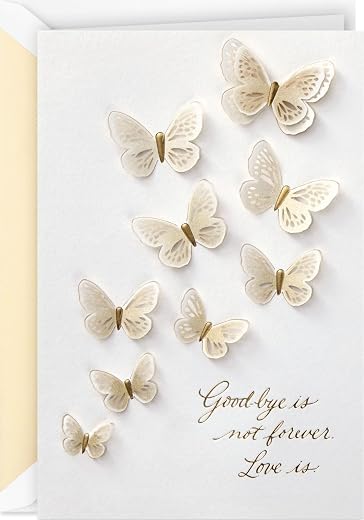
A separate handwritten card is also an option when the florist’s enclosure is too small for what you want to say. Check any printed wording inside before choosing it.
Your own brief message should fit the person, rather than having to compete with a sentiment you would never say yourself.
When a note or another gesture fits better
Choosing not to send flowers does not mean doing nothing. It means matching the gesture to the person. Keep the alternative as considerate and manageable as the flowers were meant to be.
A card can be the whole gesture
If flowers are unwanted, the address is uncertain, or your relationship is more distant, a brief message or card may be enough. You do not need to attach a purchase to prove that you mean it.
A note can acknowledge the loss without requiring space, flower care, or an appointment at the door.
For someone whose preferences you know, alternatives to sympathy flowers may offer a better fit.
Avoid replacing an unwanted bouquet with an equally unwanted keepsake just because it has a sympathetic message printed on it.
Make practical support specific and optional
For a close friend, an offer such as “I can leave dinner at your door on Wednesday, if that would help” is easier to consider than “Let me know if you need anything.” Offer only what you can actually do, give them room to decline, and do not arrive without agreement.
Small care packages for a grieving friend can fit when you know the person’s tastes and dietary needs.
There is no need to assemble a box of unfamiliar products or food that must be refrigerated immediately. This is an alternative to consider, not another obligation to add to your flower order.
The principle behind offering practical help applies here too: take responsibility for the details you can handle. The person should not have to organize your kindness for you.
After sending, leave room for silence
The gesture does not need an immediate response to count. Someone may appreciate it and still have no energy to write back, talk about the loss, or explain how they are doing.
For delivery confirmation, use the florist. If tracking shows a problem, resolve it with the business first. Do not turn the flower card into a request for a photograph, a thank-you message, or reassurance that your timing was acceptable.
With a close friend, a later ordinary check-in can be welcome when it is gentle and does not ask them to evaluate your gift. “Thinking of you today” leaves more room than “Did the flowers cheer you up?”
For continued support, gestures after the funeral can help you think beyond a single delivery.
You can send sympathy flowers late without making the delay the center of the gesture. Check that flowers are welcome, arrange a delivery that fits the person’s life now, and write a few words you mean. Then let them receive your concern without needing to look after your feelings in return.