
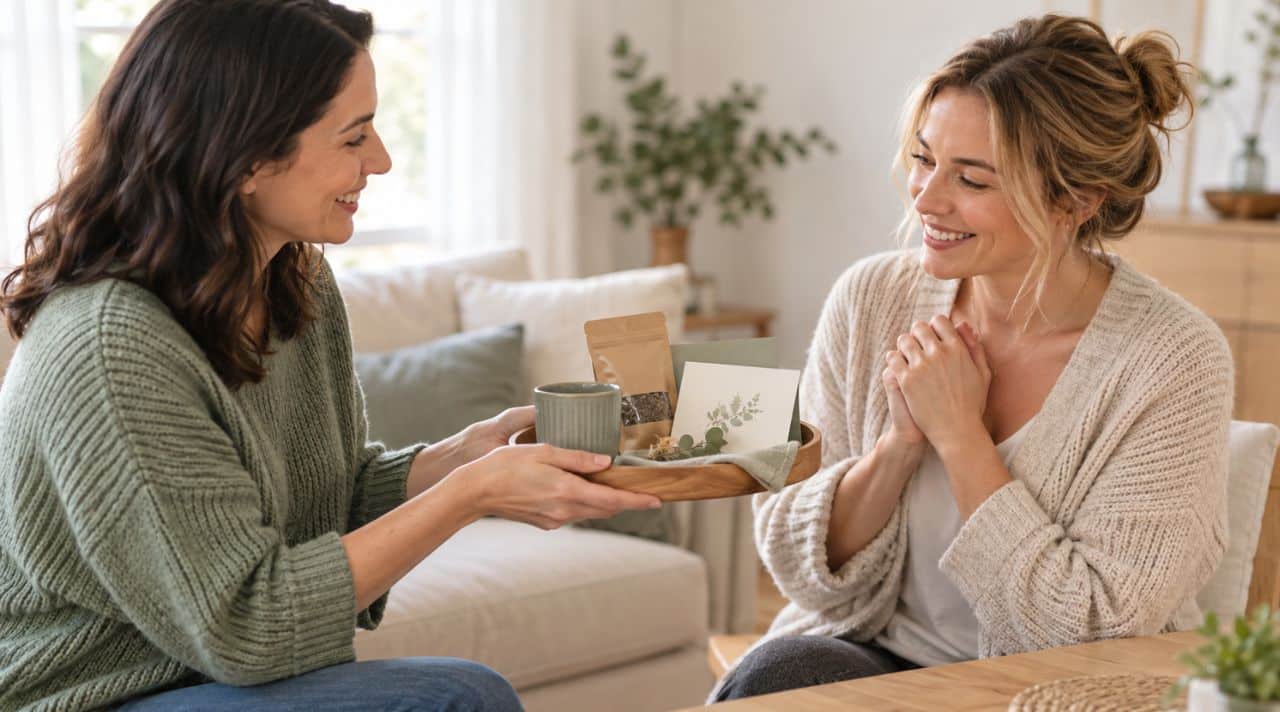

The kindest small gift may be one that leaves no trace in the cupboard.
A crowded kitchen drawer makes even a thoughtful little present hard to put away. I’d start with a simpler question: Can they finish it, use it up, put a date on it, or choose it themselves? That leaves room for a favorite snack, an outing, or credit toward something they already enjoy.
The clue is usually in an ordinary routine, not a special occasion. If I don’t know their tastes well enough, I’d rather ask than guess. The same principle helps with thoughtful gifts on a small budget: spending less works better when the gift fits.
Consumable gifts that feel generous without staying forever
Food can be a kind answer to the person who already owns enough, but “edible” does not automatically mean thoughtful.
The useful question is whether the gift matches something they genuinely enjoy and comes in an amount they can finish without turning generosity into another small obligation.
A small upgrade to something they already enjoy
I’d start with what they already reach for: a favorite tea, good coffee beans, or a slightly nicer version of their usual snack. Familiar tastes make a modest gift feel considered without asking them to find shelf space for it later.
Check dietary restrictions before choosing, and keep the amount close to what they can comfortably finish.
The upgrade can be very small. Someone who makes pour-over coffee every morning may appreciate one bag from a roaster they already like; a tea drinker may prefer a few sachets in a familiar style rather than a large sampler of unfamiliar flavors.
Good olive oil, hot sauce, honey or baking ingredients can work for a person who regularly cooks with them. The point is not to make an ordinary item look luxurious. It is to give a nicer version of something that already has a clear route into their day.
Small quantities matter here. A giant container may appear to offer better value, yet it also asks for storage and may lose freshness.
When the recipient lives alone, travels often or follows a restricted diet, one well-chosen item usually makes more sense than a hamper assembled mainly to look abundant.
Treats meant to be shared or finished
A sweet-and-salted nut basket could work for someone who enjoys nuts and has people to share it with. For a one-person household, a smaller packet may be kinder than a large assortment that goes stale.
I’d also look at what’s left after the food is gone: individually wrapped portions can be handy, but a bulky basket or several layers of packaging may leave them with the clutter I meant to avoid.
Other easy-to-finish choices include a small box from a bakery they visit, fruit for a household that eats it daily, or ingredients for one planned meal.
These work best when the recipient’s preferences are known. Alcohol, scented foods and novelty flavors need more caution because a “fun surprise” can quickly become the item nobody wants to finish.

For someone who already enjoys nuts, this assortment could sit beside the coffee and disappear a handful at a time. The practical detail is portion size: a larger basket makes more sense when several people will share it; for one person, a smaller familiar treat may be kinder
- The food can be finished rather than stored.
- Sweet and salted options give people a choice.
- Could suit a small gathering.
- Unsuitable if a recipient or likely guest has a relevant allergy.
- The assortment may include flavors they dislike.
- A large basket can leave more food or packaging than they want.
I’d check the current ingredient and allergen information, package size, and what comes in the box before ordering. Listings can change, and “assorted” doesn’t tell you whether the flavors, quantity, or amount of wrapping will suit the person. If I couldn’t confirm an allergy concern, I’d choose something else.
Inexpensive experiences that leave no object behind
An experience does not have to be a grand weekend away. Often it is simply a reason to spend an afternoon differently: coffee somewhere they like, a film they have mentioned, or a walk with the small pleasure of not having to organize it themselves.
A modest outing chosen around their interests
A film, a local event, or coffee at a favorite spot can feel generous without asking the recipient to make room for another thing.
I’d pick something close to a pleasure they already have: an afternoon screening for a film lover, for instance, rather than tickets to an event they’ve never shown interest in.
Check the venue, travel time, and likely availability before committing. A cheap ticket is less appealing if getting there becomes a project.
If plans are uncertain, I’d offer the outing rather than book a fixed date. That leaves room for their schedule without handing them a voucher they have to remember to use.
A museum’s reduced-price day, a community performance, a matinee, a local garden or a café visit can all fit this idea.
The amount spent matters less than removing friction: choose somewhere easy to reach, make sure the opening hours work and avoid an experience that requires the recipient to buy equipment, arrange childcare or spend much more money once they arrive.
A homemade invitation that gives time together
A note can be enough: “Coffee at your usual place – my treat. Would Saturday afternoon or next Wednesday work?” Name the activity, offer two dates, and say who will handle the booking or pickup. The small bit of planning is part of the gift.
You can also give an experience or gesture for free, such as a walk together, if paying for an outing would strain your budget. Keep the invitation easy to decline or reschedule.
For a friend who enjoys cooking, the invitation might be breakfast at home with one dish they love. For a relative who rarely gets uninterrupted company, it might be an afternoon visit with lunch already handled.
A shared photo walk, a library visit or an evening watching a film they chose can cost little. What gives the idea weight is the specific plan and the willingness to follow through, not an ornate homemade coupon that becomes one more piece of paper.

This Bundle includes two (2) Gift Cards. (1) $25 Darden Restaurants Gift Card and (1) $25 Fandango Gift Card Darden Restaurants Gift Card is valid at any participating Darden-connected restaurants in the U.S., including Olive Garden, LongHorn Steakhouse, Bahama Breeze, Seasons 52, and Yard House Available for use at your favorite theater, thousands of theaters nationwide Card is redeemable only for purchase of movie tickets and associated convenience fees or purchase or rental of content on Fandango and participating Fandango apps It’s a great gift for a Date Night! Movies and Dinner are the #1 out of home experience Redemption: In store No returns and no refunds on gift cards
- The recipient can choose the date and film.
- The two cards give a familiar outing a simple plan.
- Poor fit if participating restaurants or convenient cinemas are scarce nearby.
- A meal and tickets may cost more than the cards cover.
Digital and service gifts with a clear purpose
No parcel arrives, yet a digital gift can still become clutter when it introduces another account, another renewal or a balance the recipient forgets to use. The safest version usually supports a service already woven into their week.
Short subscriptions they will actually use
A digital gift takes up no shelf space, but an unused balance can be its own kind of waste. I would start with a service the person already pays for, rather than introduce a new subscription.
A Netflix gift card, for example, could help a regular viewer cover future streaming; it is less useful if they rarely watch or cannot redeem it on their account. Check the redemption terms, and avoid setting up a recurring charge they did not choose.
The same logic can apply to audiobooks, music, ebooks, gaming or a paid app, but only when the platform is already part of the recipient’s routine.
Match the exact service, account region and delivery method. A generic “digital gift” is not automatically flexible if the balance expires, works only in one country or cannot be combined with the way they currently pay.
A short period or modest credit is often safer than a full year. It supports something familiar without quietly assigning the recipient another subscription to cancel later.
Small services that remove one ordinary chore
A defined task can be more welcome than vague credit: one car wash for someone who already uses that service, or a laundry pickup if it is available nearby and they would welcome someone handling their clothes.
I would check the service area, booking process, and any costs the gift does not cover before offering it. If I cannot tell whether the task would feel helpful or intrusive, I would ask first.
These ways to give when their preferences are unclear leave room for them to choose.
Small service gifts can also be personal without becoming invasive: sharpening kitchen knives for someone who already cooks, paying for one pet-grooming visit at their usual provider, printing a set of photos they have already selected, or covering delivery from a restaurant they use.
The safest choices support an existing decision. Housecleaning, organizing, beauty treatments and wellness appointments may sound generous, but they can feel like criticism or create privacy concerns unless the person has asked for them.

Unlimited movies, TV shows, and more. Watch anywhere. Cancel anytime. Give the gift of entertainment so your friends and family can stream unlimited films and Netflix original series. Whether your loved one already has a Netflix account or they will be creating a new account, they can use a Netflix gift card toward their membership. No credit card is required to redeem a gift code. Codes are applied to your account as a gift balance Redemption: Online No Returns and Refunds on Gift Cards
- Can support a service the recipient already uses.
- Digital delivery leaves no physical card to store.
- Little value if they do not use Netflix.
- Redemption or billing arrangements may make it inconvenient; check current terms.
- Refunds may be unavailable.
Useful gifts that replace rather than add
“Useful” is not a magic word. A clever tool can still sit untouched if it solves a problem the recipient never felt they had. A better clue is something already being used until it is worn, chipped or nearly finished.
Replace a worn everyday item
A replacement earns its place more easily than another “useful” thing. I’d look for something plainly worn: a fraying dish towel, a cracked measuring cup, or a notebook nearly full. The gift should do the same job without asking the recipient to change a routine they like.
Match the details that matter. A favorite mug may be chipped, but its size and handle might be exactly right; a different one could sit unused. If I’m unsure about the size, material, or whether they want the old item replaced, I’d ask rather than guess.
Look for quiet evidence rather than inventing a need: the same pen bought repeatedly, slippers with worn soles, a phone cable held together at the connector, gardening gloves that have finally split or a paperback notebook with only a few pages left.
Replacement is safest when the brand, size or format can be checked. Clothing, cookware and personal-care items are much harder to substitute from memory because fit and preference hide in details that are easy to miss.
Choose compact upgrades with a known place
A small upgrade can work if I can name both what it replaces and where it will go. A sturdier key ring for one that no longer closes, for example, has a clearer purpose than an extra desk organizer with no desk space waiting for it.
I’d check that it fits the existing drawer, shelf, or bag and doesn’t bring along new storage needs.
For more ideas at a modest budget, useful under-$10 gifts with less clutter are worth considering only when they answer a need I already know about.
A compact upgrade might be a better bookmark for someone who reads every evening, a small rechargeable light for the drawer where they already keep a flashlight, or a replacement pouch for cables they carry to work.
Each example has a job and a home before it is purchased. By contrast, organizers, multi-tools and “clever” kitchen gadgets often create clutter precisely because the giver notices the product before noticing a problem.
Before buying, make one final clutter check
A gift can be small and still bring hidden work with it. Before ordering, look beyond the object or voucher itself: someone may have to store it, book it, travel to use it, pay the remaining cost or quietly work out how to decline it.
Would they use it, finish it, or choose the date?
Try to complete one honest sentence: “They already drink this tea,” “They go to this cinema,” or “Their old measuring cup is cracked.” If the sentence begins with “They might,” the gift is still a guess. That does not make it wrong, but it is a reason to choose a smaller amount, a flexible date or an easy exchange.
- Can I name the habit, interest or worn item this gift connects to?
- Will it be used up, replace something, or leave after a chosen date?
- Does it require storage, travel, booking or extra spending?
- Have I checked allergies, account restrictions, location and redemption terms where relevant?
- Could the recipient decline, exchange or choose another option without embarrassment?
When cash, a gift card, or asking first is kinder
Asking does not drain the meaning from a gift. For someone protecting a calm home, the freedom to choose may be the thoughtful part. Cash or credit for a place they already use can also be kinder than a surprise that creates an errand.
Even among less-stuff gift ideas, the best clue is still one habit or interest you know belongs to the person – not to a list on the internet.
The question can be gentle and specific: “Would you rather have coffee together, something edible, or credit toward a place you already use?”
Offering a few directions still leaves room for surprise while protecting the recipient from another unwanted object. For close family members, cash toward a known plan may carry more care than disguising the same amount inside a generic gift set.
People who seem to have everything usually do not need a more unusual object. They need the giver to notice what they enjoy, what they already use and what they would rather not manage. A modest gift that can be enjoyed and then disappear often leaves behind exactly enough: a good afternoon, a familiar pleasure or the feeling of having been seen.