


I had worked with the same boss for years and had never once bought him a gift.
We were close in age, but giving something to the person above me at work simply did not feel like me. Then one morning, on the way to the office, I passed a small food stall selling steamed cassava with coconut milk. It was the kind of humble dish both of us might have known as children. I stopped and bought some.
When I arrived, I went into his office, set it on his desk, and said, “Try this.” That was all. There was no holiday, no wrapped box, and no speech. He looked unexpectedly moved. A short while later, every bit of the cassava was gone.
I still would not say employees should routinely buy gifts for their bosses. That moment worked because it did not feel like a gift to a boss. It was inexpensive, shareable, and connected to an ordinary memory rather than to his position.
Should you give your boss a gift?
Giving your boss a gift is optional, not a workplace duty. A sincere thank-you, a thoughtful note, or good work done with care is enough. In many offices, the usual principle is that gifts flow down – from managers to employees – rather than up the reporting line.
That does not make every small gesture wrong. It means the gesture should be modest, easy to understand, allowed by company policy, and free of any suggestion that you are trying to earn special treatment.
A voluntary group card is usually easier than an expensive personal present. A shared snack may feel natural where a private luxury item would not.
For another perspective, Dan and Lizzie Post discuss the same awkward question: can an employee give a boss something thoughtful without making the gesture feel loaded?
The useful distinction is not simply “gift or no gift,” but whether the gesture creates pressure, obligation, or the appearance of influence.
Would this still feel comfortable if my coworkers saw it, knew what it cost, and heard what I said when I gave it? If the answer is no, I would make the gesture smaller or leave the gift out entirely.
Why a gift to your boss can feel different
Your manager can affect your working life
A boss may influence schedules, assignments, reviews, pay, promotions, and time off. Because of that, a personal gift can raise questions that would never arise with a friend. Your manager may worry that accepting it creates an obligation. Coworkers may wonder whether you are trying to stand out.
Timing matters too. A present given just before a performance review, promotion decision, contract renewal, or request for leave can be easy to misread. I would wait until the decision is over, send a specific note instead, or make any gesture part of a transparent team effort.
The workplace may have rules you cannot see
Some companies set a dollar limit. Government agencies, schools, healthcare organizations, financial firms, and vendors with active contracts may have stricter conflict-of-interest rules.
Check the employee handbook or ethics policy, or ask HR a general question before buying anything. A gift that your boss is not permitted to keep is not a kindness to either of you.
The broader gift-giving etiquette for awkward situations still applies here: respect a stated boundary, do not create a debt, and do not make the recipient manage your disappointment.
When a small gesture can feel natural
A spontaneous, low-cost kindness
The cassava I brought to work had no ceremonial weight. I did not choose it because it looked impressive. I chose it because it recalled something familiar, and it was easy to share.
A bakery item for the break room, coffee after a difficult morning, or a small local specialty can sometimes carry the same ease – provided the workplace allows it and dietary needs are clear.
This kind of moment should stay occasional. Repetition can turn a warm surprise into an expectation, especially when only the manager receives it. The point is not to establish yourself as the employee who always brings something.
A retirement, farewell, major work anniversary, or the end of a long project gives the gesture a clear purpose. A team-signed card, shared lunch, or modest group gift generally feels less loaded than a present handed over privately.
These are also situations where work-appropriate thank-you gifts can make sense without turning gratitude into a performance.
Keep participation voluntary. Nobody should have to disclose why they cannot contribute, and the organizer should not publish names or amounts. Signing the card without adding money is a complete contribution.
Birthday, holiday, Boss’s Day, or leaving: what changes?
Birthday and Boss’s Day
A group card is enough. Where the office already celebrates everyone’s birthday in the same simple way, include the boss in that routine.
I would avoid a personal birthday gift unless there is a genuine friendship outside the reporting relationship – and even then, I would keep the exchange outside work and well away from appraisal season.
Boss’s Day can feel especially compulsory. You are allowed to skip it. Appreciation arranged under social pressure is not more sincere because it comes with flowers or a mug.
Christmas and other holidays
Check whether the workplace exchanges gifts at all and whether the custom includes managers. A card from the team, a small shared food item, or a charitable collection suggested by the group may fit. Do not assume everyone celebrates the same holiday, drinks alcohol, or wants another object to take home.
When you or your boss is leaving
A farewell is one of the easier times to give something because the reason is clear and no future favor is implied. Still, a personal note may become the part they remember.
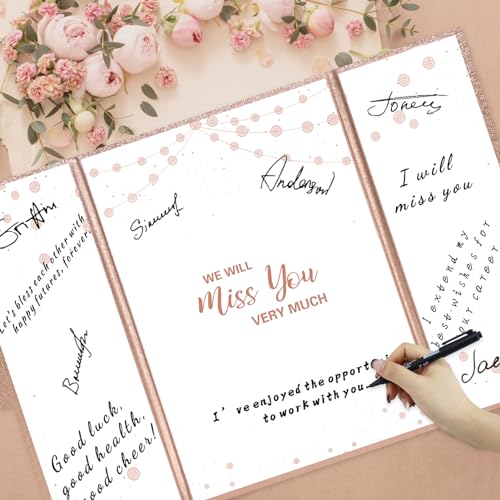
Mention the advice, trust, or opportunity that mattered: one concrete sentence carries more weight than a generic “best boss ever” message.
How much should you spend on a gift for your boss?
For an individual gift
Search results often suggest about $20 to $30 for an individual gift, but I would treat that as a ceiling to consider, not an amount you are expected to reach.
Your workplace policy, income, local prices, and relationship matter more than a number on the internet. A $7 pastry connected to a shared memory can be more fitting than a $75 object chosen out of obligation.
A $100 personal gift will feel too expensive in many ordinary workplaces. It can create an uncomfortable sense of debt and attract attention from colleagues.
Before shopping, set a reasonable office gift limit that does not touch money needed for bills or savings.
For a group contribution
A common contribution may be around $10 to $25 per person, but a good organizer makes room for less, more, or nothing. The gift should be sized to the money freely collected; employees should not be pushed to meet a preset purchase.
“We’re signing a card and collecting for a small farewell gift. Please join only if you’d like – there’s no expected amount.”
What is an appropriate gift for a boss?
Choices that usually create less pressure
- A card with one specific sentence of thanks
- A team-signed card for a birthday, retirement, or farewell
- A modest shared food item with ingredients clearly listed
- A small group gift based on a known, work-safe interest
- A donation to a cause the recipient has publicly named, where policy permits

You do not have to guess at somebody’s private taste. Safe choices for someone you do not know well are usually useful, shareable, or consumable rather than intimate.
Gifts I would avoid
- Cash or an expensive gift card
- Fragrance, clothing, jewelry, or anything intimate
- Alcohol unless it is clearly appropriate and permitted
- Joke gifts that touch age, politics, religion, health, or appearance
- A lavish dinner, ticket, or experience for only the two of you
- Anything given secretly or close to a decision affecting your career
A gift card can be practical, but it is still a cash-like benefit and may be restricted. It can also assume a store, hobby, diet, or location that does not suit the recipient.
The guide to choosing cash or a gift card may help with that distinction, though for a boss I would first choose a note or a voluntary team gesture.
How to thank your boss professionally without a gift
Write one thing you genuinely noticed
Skip grand praise. Name the action and what it changed for you. That keeps the message professional without making it cold.
“Thank you for giving me honest feedback before the presentation. I went into the room much better prepared because of it.”
“I appreciated the way you protected the team’s time during that difficult month. It made a real difference.”
Decline a collection without apologizing for your budget
You can appreciate your manager and still sit out a group gift. A quiet, plain response is enough:
“Thanks for including me. I won’t contribute this time, but I’d be glad to add a note to the card.”
No colleague needs a report on your finances or feelings. A collection stops being voluntary when people must defend saying no.
A final decision check
| Ask yourself | A comfortable answer |
|---|---|
| Is it permitted? | The company policy clearly allows it. |
| Would it feel fine in public? | I would not mind the team knowing what it is and what it cost. |
| Can my boss decline easily? | Yes – without embarrassing me or owing me anything. |
| Is the timing clean? | It is not tied to a review, promotion, favor, or sensitive decision. |
When one answer feels uneasy, reduce the gesture to a card or sincere words. The aim is not to find a loophole that makes a gift acceptable. It is to let appreciation arrive without bringing pressure along with it.
I think back to that small portion of cassava because nobody had to interpret it. It did not ask for recognition, and it did not try to impress. Sometimes the most generous thing about a gesture is how little explanation it needs.