


A low price does not have to announce itself from across the room.
Online, almost anything can have a good day. The lighting is soft, the ribbon sits exactly where somebody put it, and the camera never turns the mug around to show the seam on the other side.
Then the package arrives.
That is where cheap gifts that don’t look cheap either hold up or fall apart. The person receiving the gift will not be holding the listing photo. They will feel the material, open the lid, look at the edges, and notice whether the little details seem tidy.
I don’t think an inexpensive gift needs to fool anyone into believing it cost more. I would rather choose something modest that looks good for exactly what it is. Cheap is a price. Cheap-looking usually comes from a collection of small details.
- How the object looks once the styled photo is gone
- Whether the material and finishing feel honest for the price
- Whether the gift suits the person before presentation is added
What actually makes a cheap gift look cheap in person?
I have seen inexpensive things that looked perfectly respectable and more expensive things that made me wonder where the money went. Once an object is in someone’s hand, the difference often shows up in ordinary places: the edge of a lid, the feel of a zipper, the printing on a label, or the way two pieces are joined.
That is why I would not begin with “Does this look expensive?” A more useful question is, “Does anything about this look careless?” A simple object with nothing obviously wrong often feels more polished than an elaborate one with several little flaws.
Small flaws become obvious when someone holds it
A listing photo can hide a surprising amount. A loose thread can face the other direction. A slightly crooked lid can be photographed from above. A shiny finish can look substantial under studio lighting and much lighter when it is actually in a hand.
Edges and seams
Straight edges, even stitching, smooth rims, and joins without obvious glue tend to disappear into the object. Rough finishing calls attention to itself.
Printing
Words, initials, and photographs become focal points. Crooked placement, fuzzy printing, or uneven lettering is difficult to ignore once the gift is close.
Hardware
A clasp should clasp, a zipper should move, and a lid should sit properly. Small moving parts can make a simple object feel solid or surprisingly flimsy.
Surface finish
Peeling, scratches, uneven coating, or a surface that seems fragile before use begins can make an inexpensive item feel cheaper than it needed to.
None of those details sounds exciting enough for a gift-guide headline. That is rather the point. Good finishing tends not to demand attention. Bad finishing does.
Trying too hard to look luxurious can backfire
I am especially cautious with inexpensive objects that are working very hard to tell me they are luxurious. Mirror-bright gold, faux marble, oversized boxes, several dangling charms, elaborate script, and the word premium can create more things to inspect rather than more value.
I would rather have one ordinary material used well. Glass can look like glass. Ceramic can look like ceramic. Cotton is allowed to be cotton. A simple object does not have to impersonate something grander in order to be worth giving.
So when I see the question “What gift looks expensive but isn’t?” I would change it slightly. I am less interested in making a gift pass for expensive than in finding one that still looks good when there is no flattering photograph helping it.
What makes an inexpensive gift feel more polished?
Once I stop asking an inexpensive gift to look expensive, choosing becomes easier. I can pay attention to whether the object feels complete on its own: whether the material suits the job, whether the finish is tidy, and whether the size feels natural rather than disappointing.
“Polished” does not have to mean formal. A plain mug with an even glaze can look polished. So can a small cotton pouch with straight stitching or a simple metal bookmark with clean edges. None needs to imitate a designer object.
There are many ways to choose meaningful gifts on a budget without making price the most interesting thing about them. Here, I would pay particular attention to material, finishing, and scale.
Simple materials usually have less to prove
A little ceramic tray with an even glaze, a plain glass container, a smooth wooden object, or a simple metal piece does not need dozens of decorative details. Its shape and finish can do most of the work.
I also look at how much the design asks the material to do. The more embellishment there is, the more opportunities there are for one part to peel, tarnish, wobble, or arrive slightly crooked.
Clean finishing matters more than decoration
A modest price does not make me expect perfection. It does make me look for consistency. If the shape is simple, the printing is clean, and the parts fit together as they should, there may be nothing about the gift that asks the recipient to think about its price at all.
- Look at the focal detail. Printing, initials, photographs, or decoration should sit where they seem intended to sit.
- Look at the edges. Rims, seams, corners, and joins often reveal more than the front of the object.
- Look at moving parts. Lids, zippers, clasps, and hinges should do their small jobs without fuss.
- Look at the surface. A gift should be able to survive ordinary touching without immediately looking tired.
That is a quieter kind of polish than metallic trim or elaborate packaging, but it tends to survive the trip from the product page to someone’s hand much better.
The size should make sense for what the object is
Small is not the same as cheap-looking. A pocket notebook is supposed to be small. So is a bookmark, a jewelry dish, a tea tin, or a little frame.
What feels different is a large “luxury gift set” that opens to reveal a few tiny products floating in molded plastic and filler. The packaging has promised more than the contents can comfortably deliver.
A small object feels intentional when its size makes sense for its job. A bookmark marks a page. A ring dish holds a few small pieces. A little tin contains a modest treat. None of those objects needs a large box to prove that it is gift-worthy.
I would rather give the honest little object than make something modest look larger with layers of filler.
Cheap gifts I would choose for their finish, not their price
I don’t think there is one magical category of cheap gifts that look expensive. A candle can look lovely or dreadful. So can a mug, notebook, keychain, tray, or box of chocolates.
What matters more is whether I can see a reason the object should work for this particular person. That keeps me from choosing something merely because the product photograph has managed to look expensive.
These are the directions I would consider first because each gives me something more useful to judge than decoration alone.
A small object made from one straightforward material
A small ceramic dish, glass container, wooden keepsake, or metal bookmark gives me fewer places for disappointment to hide. I can look at the material, shape, finish, and basic construction without being distracted by a long list of promises.

I would still choose for the person. A beautifully finished jewelry dish for someone who never wears jewelry is just a very elegant place to collect dust.
An everyday object with one job
A notebook that opens comfortably, a pen that feels pleasant in the hand, a bookmark that slips neatly between the pages, or a small pouch with a smooth zipper can make a perfectly respectable gift.
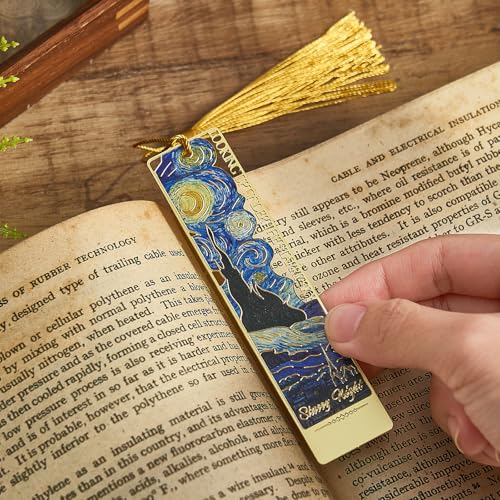
The object does not have to produce a little gasp when the box opens. It has to suit the person. When their tastes are still mostly a mystery, an affordable gift for someone you barely know is safer when it asks little of them: a clear use, modest style, and no obligation to display it forever.
That is one reason useful little objects often survive a modest budget well. Their value can come from doing one ordinary job nicely rather than from looking impressive for the first thirty seconds.
Something consumable when you know their everyday favorite
If I already know the tea they drink, the coffee they buy, or the chocolate they reach for, I don’t need to invent a more impressive preference on their behalf. Their ordinary favorite can be the gift.

Here I prefer restrained packaging to a huge hamper. A clean little box that contains exactly what it appears to contain can feel much more polished than layers of filler arranged to make a modest amount look enormous.
The important part is knowing the preference first. Food restrictions, allergies, fragrance, caffeine, and personal taste make “everyone likes this” a rather unreliable shopping strategy.
Personalization works best when it doesn’t take over
An initial, a date, or a photograph can make a modest object feel much more specific to one person. But more personalization is not necessarily more personal.
The same restraint matters with custom photo gifts that don’t look cheap on display. The photograph already carries the emotional weight. The object around it does not need to shout.

If the custom element becomes the entire design, every problem with printing, cropping, color, or placement becomes impossible to ignore. I would rather have one small detail done well.
Look at the boring details before you buy
The trouble with shopping for cheap gifts that don’t look cheap online is that the details I care about most are difficult to judge from a hero image. I cannot feel the weight, run a finger along an edge, open the zipper, or see how large the object looks beside an ordinary hand.
So I try to replace touch with evidence. I look beyond the first photograph, check measurements instead of guessing at scale, and pay more attention to repeated recent complaints than to one glowing or furious review.
This takes a few extra minutes, but those minutes belong before the purchase. A bargain stops feeling like one when the gift arrives and I have to replace it in a hurry.
Check customer photos, not only listing photos
Product photography has a job: make the product look good. I don’t hold that against it. I just don’t ask it to be my only witness.
Customer photos can show the object under ordinary kitchen lighting, beside a hand, sitting on a real shelf, or after the box has survived delivery. That is often where scale, color, finish, and packaging become easier to judge.
I use the same caution when finding a quality inexpensive gift online: the selected variation, material, dimensions, current seller, recent reviews, and return terms matter more than the prettiest image in the gallery.
Check dimensions with something you already own
Measurements such as 4.2 by 2.8 inches do not always create a useful picture in my head. A ruler does.
I can compare the listed dimensions with a mug, notebook, tray, or another familiar object. It takes less than a minute and can prevent the peculiar disappointment of opening a package and saying, “Oh. I thought it was… more.”
A small product is not necessarily poor value. I simply want to know that it is small before I buy it, not discover the fact while holding the box.
Read repeated complaints, not one dramatic review
Reviews become more useful when I stop treating each one as a verdict. What I want is a pattern. Several recent buyers noticing the same weakness tell me much more than one person who loved everything or hated everything.
- Look at several recent customer photos. One image can mislead in either direction. Several ordinary photos make scale, finish, and packaging easier to judge.
- Compare the dimensions. Use a ruler or something familiar rather than relying on apparent size in a photograph.
- Look for repeated recent problems. Peeling, crooked printing, scratches, loose lids, or damaged packaging matter more when several buyers report the same thing.
- Check that the reviews describe the current version. Materials, packaging, bundles, and sellers can change.
One furious review can be about almost anything. Ten people independently mentioning the same loose clasp have my attention.
Presentation can polish a gift, but it cannot rescue one
Presentation does matter to me, especially with a modest gift. A clean box, tissue that fits, and a handwritten note can make the handoff feel cared for. But there is an important difference between presenting something well and trying to disguise what it is.
If the mug is chipped, the printing is crooked, or the lid will not sit straight, another ribbon does not solve the problem. I would rather replace the object than decorate around the flaw.
For a gift that is already sound, I keep the finishing simple. First I remove the signs that it has just traveled through a shipping network. Then I use only enough wrapping to make it feel ready to give.
Remove the things that make it look like a shipment
If a gift arrives by mail, I remove the delivery box, mailing label, price slip, excess plastic, and packing material that is no longer needed. I also make sure the item is clean, complete, and undamaged before wrapping it.
- Remove: shipping labels, price slips, unnecessary packing paper, and damaged outer packaging.
- Keep: care instructions, safety information, ingredients, allergy information, and anything else the recipient may need.
- Check: the item itself, not just the box. A missing piece or small crack will not improve while it waits under tissue paper.
The idea is not to disguise where the item came from. It is simply to hand someone a gift rather than a parcel I stopped unpacking halfway through.
Use less wrapping, but make it fit
A bag or box reasonably close to the size of the gift, a little tissue when it serves a purpose, and a short note are usually enough for me.
An inexpensive gift does not become more convincing because it is buried under three bows, metallic shred, and a box large enough to accommodate a toaster.
A five-dollar ribbon cannot persuade a loose lid to sit straight. If the object arrives chipped, crooked, badly printed, or noticeably poorer than the listing suggested, I would return it rather than ask prettier paper to do a job it cannot do.
Once the gift itself is sound, presentation becomes much easier. It only has to say, quietly, that I finished the job before handing it over.
When secondhand can look better than cheap-new
A modest budget does not require everything to come straight from a factory. Sometimes an older wooden box, a well-made little dish, a book in excellent condition, or another carefully chosen secondhand object has better materials and workmanship than something newly made at the same price.
I would not choose secondhand merely because it is cheaper, though. The object still has to suit the person, and its condition has to be good enough that receiving it feels intentional rather than like being handed something I wanted to clear out.
This is one place where “looks expensive” is not even the most useful standard. An older object may show a little age and still feel substantial and attractive. The real question is whether that age belongs naturally to the object or has crossed into damage.
Condition matters more than whether it was new
I would look at a secondhand gift with the same eyes I use for a new one. Is it clean? Is it complete? Does it work? Are the surfaces, pages, seams, closures, and edges still in good condition?
Sometimes it makes more sense to thrift a gift worth giving than buy something flimsy simply because the flimsy thing happens to be new.
A secondhand gift also needs to feel selected rather than transferred. Cleaning it properly, checking that nothing is missing, and making sure it suits the recipient matter more to me than whether the original price tag is still attached.
Some wear is character; some wear is damage
A little age can belong to an object. A wooden surface may have softened with use. An older book may have a gently worn cover. That can be part of why it is appealing.
For me, character is gentle wear that belongs naturally to the material and does not interfere with using or enjoying the object. Damage is different: cracks, strong odors, stains, broken hardware, missing pieces, or a repair job the recipient will inherit with the gift.
“Vintage” is not a diplomatic synonym for “I hope you know how to fix this.”
The goal isn't to make a cheap gift pass for an expensive one
I don’t need someone to hold a $12 gift and believe I spent $50. That would be a strange little performance for both of us.
What I want is simpler. I want the object to feel chosen rather than grabbed, finished rather than flashy, and appropriate for the person who will have to live with it after I leave.
I would rather buy one modest thing with clean finishing than a large gift set padded with fillers. I would rather give an ordinary material that looks honest than a fake-luxury finish already beginning to peel. And I would rather return something disappointing than hide it under beautiful paper.
The best inexpensive gift doesn’t make someone wonder how much you spent. It makes the price feel beside the point.