
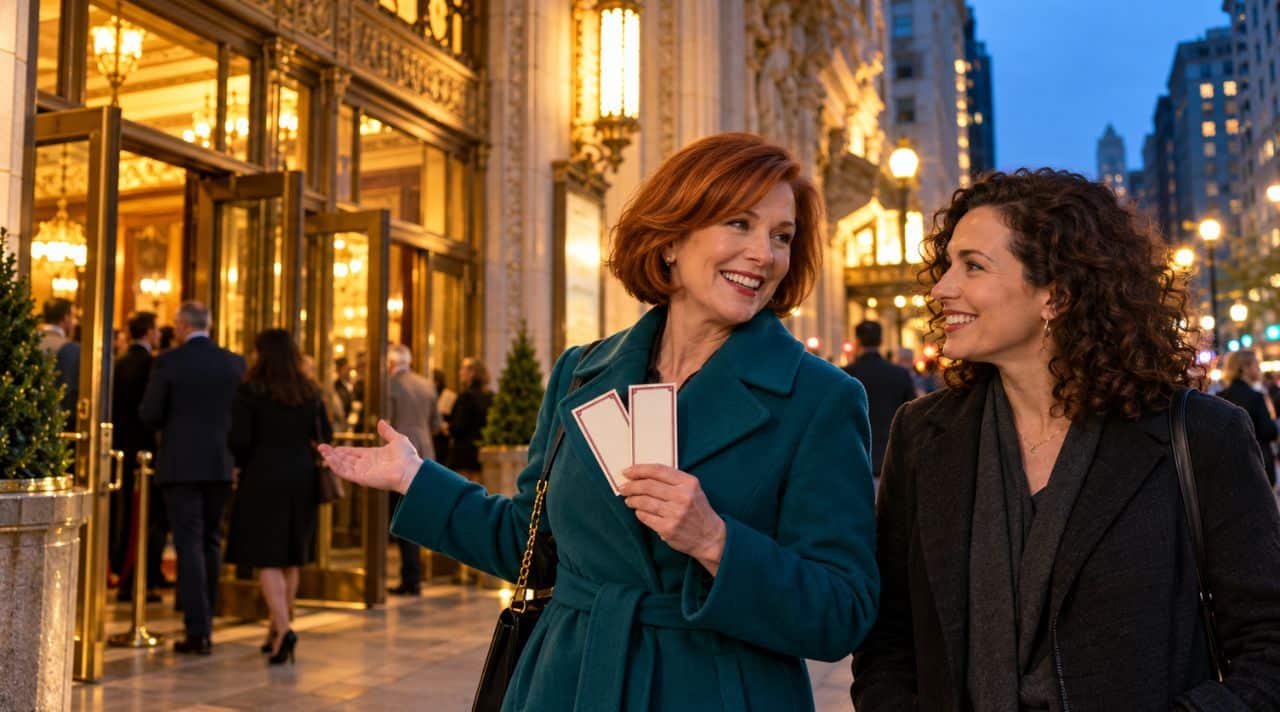

You have found a show they would love. Now comes the awkward part: does the gift need a second ticket?
There is no single number that makes the gift considerate. One ticket can be just right for someone who enjoys going alone, or for a friend joining you when you already have your own seat. Two can make the evening easier for someone who wants company. But handing over a pair does not tell them whether you expect to use the other one.
If you are wondering, should I gift one or two tickets?, start with how the person would use them. Do they like solo shows? Would they want to bring someone? Are you offering them a night out of their choosing, or inviting them to spend it with you?
Those answers matter more than making the envelope look generous. Decide who the tickets are for, check that the plan works, and make the gift clear enough that nobody has to guess at the door.
One ticket or two? Start with how they would use the gift
Before comparing seat prices, picture the evening after the gift has been opened. The useful question is whether the recipient can enjoy the show in the way they would choose, with the company they want.
| If this describes the recipient | What to consider | What to confirm |
|---|---|---|
| They enjoy seeing shows alone | One ticket may be enough | Choose a show and seat they want, on a date they can use. |
| They would want to bring someone | Consider two tickets | Make clear that they can choose their guest. |
| You want to take them with you | Buy your seat and offer theirs as the gift | Ask whether they want to go together before committing. |
| Their friends already have tickets | One ticket may work | Check whether they can actually join the group. |
| You do not know their plans or preferences | Ask before buying | Resolve the missing detail instead of buying an extra seat just in case. |
These are starting points, not rules about how much you should spend. A single ticket is not automatically half a gift, and a second seat is not automatically useful. The distinction becomes clearer once you separate going alone from receiving one ticket.
One ticket works when going alone – or joining others – is their choice
A person can receive one ticket and still spend the evening with company. What matters is the arrangement around that ticket, rather than the number you hand over.
They already enjoy seeing shows on their own
If they regularly book solo theater visits or talk happily about concerts they attended alone, one seat can fit the way they already enjoy themselves.
They can choose when to arrive, stay focused on the performance, and leave without coordinating another person’s evening.
That is different from assuming they will be comfortable alone because they are single, quiet, or especially fond of the artist. None of those details answers the question.
If you do not know, ask: “Would you enjoy going to this on your own, or would you want someone with you?”
Their answer may also be specific to the event. Someone who enjoys an afternoon play alone might want company for a late concert in another city. Check this outing, not just your general impression of them.
You or their friends already have tickets
If you have your own ticket and want to treat a friend to the seat beside you, the gift can be their one ticket. You are inviting them to join you, with their admission covered.
Say that before buying; wanting to spend time together is a good reason for a gift, but it still needs to be a plan they want.
One ticket may also work when the recipient is joining friends who have already booked. Confirm the details before buying a seat that sounds close enough.
In a reserved-seat venue, the same section does not mean the seats are together. With general admission, check that the ticket gives access to the same area as the group’s tickets.
If you cannot arrange that, tell the recipient before committing. They may be perfectly happy meeting their friends before and after the performance, or they may prefer to save the outing for another show. Let their preference settle it.
Two tickets help when company is part of the evening they want
Two tickets are worth considering when the person would enjoy the show more with someone they choose.
The second seat removes the need to find a companion who is both free and willing to buy admission. That can make a gift easier to accept and use.
For theater tickets for couples, check that both people actually want to see the production. A partner who loves musicals does not necessarily share that interest with their spouse.
If the gift is mainly for one person, a pair they can use with a friend may be more suitable than naming their partner as the guest.
Before treating a pair as a complete plan, check these details:
- Same performance: both tickets are for the same date and start time.
- Usable seats together: for reserved seating, verify the actual seat locations rather than relying on the quantity shown in the cart.
- Suitable access: check the view, stairs, standing requirements, or other needs the recipient has mentioned.
- No missing companion ticket: if the gift is meant for two, the recipient should not discover that only one admission has been covered.
There is no need to buy an extra seat merely because gifts are often pictured as pairs. If they have said they would rather go alone, believe them.
The point of two tickets is to make room for company they want, not to invent company they must arrange.
Say whether the second ticket is theirs or yours
Two tickets can describe two different gifts: a pair for the recipient to use, or an invitation to go with you. Neither arrangement is inherently unkind. Leaving the arrangement unspoken is where the trouble starts.
If both tickets are gifts, let them choose their guest
When you give both tickets to someone, make the choice of companion explicit. They might invite a partner, a sibling, or the friend who loves that performer as much as they do.
They should not have to work out whether choosing anyone other than you would hurt your feelings.
“Both tickets are yours—take whoever you’d enjoy the show with.”
Only make that offer if you are comfortable with it and the ticket conditions allow the intended use. If you hoped to be their guest, it is better to say so beforehand than quietly treat their choice as a test of the relationship.
If you want to go together, offer a clear invitation
An invitation can be personal without being a demand. “I’d love to take you to this show for your birthday. Would you like to go together?” explains both the treat and the company you have in mind.
It also gives them a chance to tell you the date is wrong or the show is not for them.
After they agree, buy your own ticket and theirs. You do not need to describe your seat as part of the gift to them. The gift is their admission and the shared outing you have arranged together.
If you have already bought tickets, be honest about the invitation and leave room for a real answer. Avoid presenting a fixed plan as something they have already accepted. A little less surprise is often worth a much clearer evening.
If two tickets exceed your budget, change the plan before shifting the cost
A budget limit is a reason to reconsider the plan, not a reason to feel ashamed of the gift. Start with the recipient’s preferred way of attending, then see what you can comfortably cover.
An excellent single seat is not an upgrade for someone who would not want to use it alone.
Four options to compare
- Give one ticket when one genuinely fits
Choose this for a willing solo attendee or someone with an agreed plan to join you or friends. Do not rely on them learning to enjoy going alone because that is what the budget allows.
- Compare a less expensive pair
Look at another section or performance, while checking that the view and seating still work. Two obstructed or separated seats are not automatically a better gift.
- Choose a different show or outing
A smaller venue, another production, or a different activity may let you cover a shared evening without stretching your finances.
- Offer a clearly stated contribution
If you want to help pay for tickets rather than buy them outright, say so before they book. The recipient should know there is a balance to pay and be free to decide whether they want that expense.
Separate the ticket cost from the rest of the outing. You do not have to promise every meal, ride, or overnight stay.
But if a companion would need to buy another expensive ticket, or the venue requires a costly trip, make that clear before calling the gift settled. A warm surprise can cool quickly when the extra bill appears.
If the purpose is mainly to spend time talking together, making a meal out feel personal may matter more than finding a performance you both like. You can agree on a restaurant and a budget that suit the occasion.
For someone who enjoys trying new flavors, a celebratory tasting outing without alcohol is another possible shared gift. Check its actual cost and availability; it is an alternative activity, not a promise of a cheaper one.
Check the seats, date, and entry rules before you pay
Once you know how many tickets make sense, inspect the exact booking. This is where a good idea can become an awkward gift: the seats are apart, the date clashes, or the recipient cannot use the ticket in the way you expected.
- Date and time: confirm that the recipient can attend, and check the companion’s availability if a particular person is part of the plan.
- Seats: verify the section, row, seat numbers, and any view restrictions. For general admission, check which area the ticket covers.
- Total cost: review the checkout total and any extras you intend to include before deciding that the booking fits your budget.
- Journey: consider the venue, likely finish time, return transport, and whether an overnight stay would be needed.
- Entry and access: check the venue’s official information for age limits and arrangements relevant to the recipient. Ask the box office about accessible or companion seating rather than assuming a standard pair will work.
- Delivery: confirm how the recipient will receive and present the ticket, including any account or app requirements.
- Changes: check the current conditions for transfer, exchange, resale, or cancellation before promising any of them.
Whether concert tickets can be transferred when plans change affects how freely the recipient can choose a guest or pass on an unused seat. Verify the seller’s rules for the actual event; an available ticket is not automatically transferable.
For Ticketmaster bookings, its official Ticket Transfer instructions explain how to check eligibility and how the recipient accepts a transfer.
Once accepted, the recipient receives a new barcode and the sender’s old ticket is no longer valid for entry. These instructions apply to Ticketmaster, not every ticket seller.
A printed reveal card can make the gift pleasant to open, but send the usable ticket through the seller’s approved method. Ticketmaster’s moving-barcode guidance says screenshots will not get those tickets scanned for entry. Do not leave the recipient with only a picture of what you bought.
If any essential detail is uncertain, pause. A short question to the recipient or the box office is more useful than a hopeful promise that the date or guest can be changed later.
Give them a note that makes the plan clear
The note does not need to defend the number of tickets or explain your budget. It needs to say what you are giving and how the evening is meant to work. Adapt one of these examples after the relevant plans have been confirmed.
Three ways to word the gift
-
One ticket for someone who wants to go solo
“A seat for you at the show you’ve been wanting to see. It’s booked for the date we checked together. I’ll send the ticket separately so you have everything ready.”
Include the confirmed date and start time. Use this approach after checking that they want to attend alone.
-
Two tickets, with their choice of guest
“Two seats for you – bring whoever you’d like. I’ve covered both tickets. I hope you have a wonderful evening.”
Include the date, venue, and delivery details with the message. If you are covering anything else, such as parking, name it.
-
An outing together, after they have agreed
“I’m looking forward to our night at the show. Your ticket is my birthday treat; I’ve booked our seats together.”
Add the confirmed details and any travel arrangement you have agreed on. This wording follows an accepted invitation rather than replacing one.
Keep the practical information together: show title, date and start time, venue, seat details, and the approved way to access admission.
If a transfer requires their acceptance, tell them what to look for and check that it has arrived. There is no need to include payment-account details or send a screenshot of a full order confirmation.
This is part of giving time, choice, and connection: choosing a plan that fits the person, then making it easy for them to enjoy it.
Clear arrangements do not make a gift less personal. They save the recipient from having to ask an uncomfortable question about what you meant.
If they want a solo evening, one ticket can be enough. If company is important to them, consider a pair they can actually use. And if the evening is meant to be shared with you, make it an invitation before it becomes a booking. Give the number of seats that fits the plan – not the number you feel obliged to put in the envelope.