


A place to hang freshly washed clothes. A little darkness when the curtains won’t cooperate. A way to pack a familiar bar of soap without its bulky box.
These are modest things to give, but for the right traveler, each could make an ordinary part of the day a little easier.
That is a useful way to approach gifts for full-time travelers who pack light: begin with something you know about how they live. Someone who sends every load to a laundry service may have little use for a clothesline. Someone who dislikes wearing a sleep mask is unlikely to welcome one just because it is made for travel.
The six choices below cover practical comforts, a requested charger replacement, and digital gifts for someone who wants nothing more in their bag. Each comes with a reason to consider it and a reason to pass. A gift can still feel personal when it leaves the packing list alone.
Choose a gift for the way they actually travel
“Full-time traveler” tells you little about someone’s ordinary Tuesday. A person changing rooms every few nights has different opportunities to use a gift from someone renting an apartment for a month.
Someone carrying a laptop for work may have less spare room than a person traveling with the same bag for leisure.
Start with their next stretch of travel. These situations can overlap; they are useful questions, not labels to assign to a person.
- They change accommodation frequently
Packing happens often, so consider how the gift is put away after use. A wet item, separate stand, or rigid storage case needs a plan on departure morning.
Look forOne-piece items, straightforward cleanup, or a gift used at a stop.AvoidA new routine that depends on a long stay. - They stay for weeks at a time
There may be time for laundry, reading, or a local class. Establish which facilities they have: a private apartment and a shared room support different routines.
Look forA gift for a repeated activity at their temporary base.AvoidAssuming they have a private bathroom, kitchen, or washing machine. - They work while traveling
A portable office can be a carefully chosen combination of devices, cables, and bags. Ask what is missing or wearing out before buying a replacement.
Look forAn exact requested item or support for a service already used.AvoidChoosing work equipment from the connector or photograph alone.
Then identify one wish or annoyance. A named book, a cracked soap box, or repeated frustration with drying clothes gives you somewhere to begin.
You do not need to ask them to design an entire present. One useful answer can narrow the field.
The wider gift choices for minimalists without adding clutter cover the broader decision.
Here, concentrate on what changes when someone must pack the gift up and carry it onward.
Practical gifts for everyday life on the road
Laundry, rest, and toiletries are ordinary parts of a long trip. These everyday gifts address a specific inconvenience in each routine. A charger replacement and digital gift options follow in their own sections.
A travel clothesline for laundry between stops
A traveler who washes socks or underwear in the evening may have solved the washing part but not the hanging part. A chair back holds little, and a damp shirt draped over it can be in the way.
A portable line is worth considering when the person wants to keep doing small loads themselves.
Sea to Summit Lite Line Clothesline holds garments between parallel cords, using sliding beads rather than separate clothespins. The benefit is specific: it provides another hanging option without adding loose pegs to the laundry kit.

Sea to Summit’s setup instructions describe wrapping the ends around suitable suspension points and hooking them in place.
Find out whether the recipient’s usual accommodation offers an appropriate spot. A line stretched across a shared walkway is not a useful solution.
It also needs time. A person staying several nights can arrange washing around their departure; someone moving every morning may prefer a laundry service or a routine they have already worked out.
The line does not provide ventilation or guarantee dry clothes by checkout. Give it for a hanging problem, rather than as a promise to solve every laundry problem.
An adjustable sleep mask for rooms that won’t stay dark
If the person already uses a sleep mask but complains about the fit, a different design can be a small comfort worth carrying.
Find out what bothers them: pressure near the eyes, fabric against the skin, the strap, or light around the edges. Those are different reasons to replace one.
Manta Original Sleep Mask has detachable eye cups that can be repositioned along the head strap. That adjustment is the reason to consider this model, rather than a general claim that every traveler needs a premium mask.

There is a trade-off: the shaped cups need room in the bag, and the feel will not suit everyone. A flat mask may be preferable to someone who values the smallest possible package.
For a person who wants this design, however, the extra structure may be part of what they are choosing.
Manta’s care directions specify cold machine washing inside a mesh laundry bag and air-drying flat. If the traveler uses a different washing method, consult the guidance for their exact mask before buying.
Keep the purpose modest: covering the eyes with an adjustable fit. This is not a treatment for sleep difficulties or a guarantee against jet lag. If the recipient dislikes wearing masks altogether, changing the model may not address their preference.
A soft soap case for travelers who already use bar soap
A rigid soap box keeps its size as the bar inside shrinks. That may be perfectly acceptable – or it may be the little object the recipient is tired of fitting into a crowded toiletry bag.
A soft case makes sense when there is a container they actually want to replace.
Matador FlatPak Soap Bar Case V2 uses a roll-top closure and material the manufacturer describes as vapor-permeable: moisture vapor can escape while liquid water is contained.
That describes the design, not a guarantee that every soap dries completely within a particular time.

Matador’s V2 details list dimensions of 4 × 3.6 × 1.5 inches (10 × 9 × 4 cm). Those are published case dimensions, not guaranteed usable space for every bar; leave room for the rolled closure.
The brand suggests cutting unusually large bars in half.
Check whether the person would enjoy handling a soft pouch. Someone who prefers the shape and access of their existing box may see no improvement. And someone who uses liquid toiletries has no need for a soap case simply because it packs neatly.
For related zero-waste gifts without disposable extras, the same distinction matters: a reusable accessory still needs to fit an existing habit.
When replacing something is better than adding more
A replacement can make a satisfying present because the recipient already knows what the item is for. But first establish what they want changed.
“My cable is wearing out” points toward the same kind of cable; “my charger takes up too much room” opens a different question about size and charging requirements.
For any proposed upgrade, compare the complete things the traveler would carry. Include the case, cable, stand, or refill it requires. A smaller main item is not much of a saving if its accessories fill the space it freed.
-
Name what is wrong with the current item
Look for a specific issue: a broken closure, an unwanted size, a poor fit, or a missing function. Something can look worn and still be the version its owner likes best.
-
Compare the complete replacement
Check packed dimensions, necessary accessories, cleaning, and compatibility. Identify the improvement that matters to this person, rather than counting features.
-
Establish what happens to the old one
If both will travel, the present is an addition. That may be wanted, but it should be a conscious choice rather than an assumed space-saving upgrade.
For example, replacing an unwanted rigid soap box with a soft case may change the space used in one pocket. Adding the case while keeping the box gives the traveler two containers.
The same reasoning applies to a pouch or bottle: the useful improvement depends on what leaves the bag as well as what enters it.
For a traveler who has specifically asked to replace a bulky USB-C charger, Anker 715 Charger (Nano II 65W, model A2663) is one option to compare with their existing unit.
Anker lists a single USB-C port, a maximum 65W output, and dimensions of 1.65 × 1.42 × 1.74 inches on its product page.
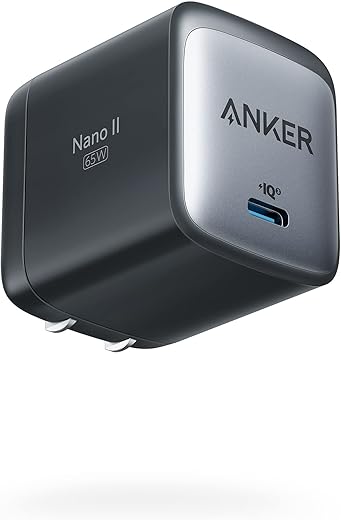
This is a conditional replacement, not a universal laptop charger. Confirm the device’s power requirements, supported charging profiles, suitable cable, and the plug arrangement for the destination.
It may not replace a charger used for simultaneous charging or higher-power equipment.
This does not mean the new item must win on every measurement. A person may accept a little more bulk for a fit they prefer or a pleasure they value. Use their priority to make the comparison.
The lightest version is not automatically their favorite.
Gifts that don’t need space in their luggage
When the traveler’s physical setup is complete, shift the gift to something they can read, use through an existing account, or enjoy at a stop. This is also a way to offer something generous when you cannot hand over a parcel in person.
An ebook for the device they already use
Choose a title they have mentioned or ask which author they would like to read next. A book can belong to a journey without being about travel: a familiar mystery series may be more welcome than another guide to living adventurously.
If the recipient already shops for books on Amazon.com and would prefer to choose a title, an Amazon.com eGift Card is another possibility.
The Amazon.com listing describes eligible purchases on that marketplace and certain affiliated sites; confirm the intended book purchase before buying. This is an emailed gift, not a new reading device.

Amazon’s ebook gifting guidance confirms that eligible books can be read on supported devices or the Kindle app. It lists single-copy gifts on Amazon.com for US readers and Amazon.in for readers in India; prepaid ebook gifts require buyer and recipient to live in the same country.
Check the applicable gifting option before paying. A current travel stop alone does not establish eligibility.
If you are considering a Kindle as a gift for a minimalist, separate that purchase from the book.
An e-reader changes what they carry; a title for a service they already use supports an existing reading habit.
A contribution to a service they already use
For someone working on the road, contributing toward a named software service can be more useful than choosing another device.
For someone who listens during long transfers, a wanted audiobook or entertainment credit may fit. Confirm the exact service and whether the intended gift can be applied to their account.
Terms differ. For example, Netflix’s gift-card guidance says a card bought in another country must match the currency of the recipient’s bill, and some billing arrangements are excluded. That does not create a rule for other services.
The practical options among digital gift subscriptions that do not arrive in boxes still depend on the person’s account and preferences.

Do not request their password or take over the account to make the present happen. Agree on a supported gift method or offer a contribution they can put toward the cost.
Gifts for digital nomads should not require the giver to reorganize the recipient’s working life.
A meal or activity they choose at their next stop
A meal somewhere they want to try, a class they have mentioned, or a contribution toward an outing can give the person something to anticipate without creating a packing decision.
A flexible offer is particularly useful when the next arrival date is not settled.
Make the offer complete enough to act on: agree on what you will cover, an amount or limit, and how payment will work. Establish whether transport or another guest is included before they book.
If using a voucher, check its location, expiry, availability, and cancellation terms with that provider.
The recipient can choose the date; you can still make the gift feel intentional by remembering the particular experience they wanted. Neither the meal nor the book needs a souvenir alongside it. Another mug can sit this occasion out.
Travel gifts to confirm before making them a surprise
Some presents are too closely tied to a traveler’s setup to choose from a category alone. They can be excellent requested gifts. The trouble comes from treating “useful for travel” as enough information to select the exact one.
Bags, clothing, and larger comfort items
A new bag changes how everything is packed and carried. Before paying, confirm the exact requested model and size, whether it replaces their main bag or serves another role, and how it fits their next journey.
“Carry-on” in a product title is not a substitute for checking the relevant airline’s allowance.
Clothing and footwear need the recipient’s preferred fit, not simply the size you remember. With a pillow, towel, or other soft item, find out where it will be stored while unused and how it will be washed.
Being comfortable in the shop and being worth carrying between stops are separate decisions.
A photograph or link to the version they want is useful here. The surprise can be that you remembered and gave it, rather than which model you guessed.
Chargers, cables, and device accessories
Get the exact device model and replacement specification. A matching plug shape does not establish all a cable’s capabilities; USB-IF guidance explicitly distinguishes cables by what they support.
Confirm the device’s requirements together with the charger and cable, rather than choosing by the USB-C connector alone.
For equipment used abroad, a plug adapter and a voltage converter are different things. Electrical Safety First’s travel-adapter advice explains that adapters do not convert voltage or frequency.
Use the exact equipment instructions and destination requirements; there is no reason to guess when the recipient can identify the item they need.
If all you know is that they travel with a laptop, a contribution toward a requested replacement is a better-defined gift than an unknown charger. An elaborate accessory bundle can contain several versions of the same mistake.
Get the gift to them without creating another errand
Decide where the gift will join the journey before ordering it. Giving it at home, sending it to a temporary address, and buying it in the country where the traveler is staying create different practical choices.
Before departure: allow time to try it and pack it
Give a physical gift early enough for the recipient to check its fit, read the instructions, and decide where it belongs. A last-minute handoff at the airport leaves little room for a wrong size, an unexpected accessory, or an exchange.
Keep the packaging that is needed for a return until they have checked the item. Once they are happy, leave the decorative gift box at home unless they want it. The object is traveling; the presentation does not have to.
At a temporary address: confirm the receiving window
Ask whether the accommodation accepts parcels for guests and which name or booking details must appear on the label. Confirm this with the property as well as the recipient where appropriate.
A building address does not establish that someone will hold a parcel after checkout.
Allow for delays rather than choosing a delivery date one day before they move. If the window is too tight, wait for a longer stay.
Ordering from a seller near their destination may reduce a cross-border leg, but the delivery, return, and receiving arrangements still need checking.
Across borders: check fees and returns before paying
USPS’s international shipping guidance explains the customs documentation required for merchandise sent through its services.
Its duties and fees guidance also notes that charges may be collected from the recipient where applicable. Writing “gift” on a parcel does not remove every requirement.
Before sending a gift overseas, check destination restrictions, possible charges, and whether an exchange is realistic.
These questions depend on the countries and seller involved; a return label that works at home may be of little help after the traveler has moved on.
If the parcel would demand a special trip, uncertain collection, or more onward luggage than they want, change the delivery plan or choose a wanted nonphysical gift. There is no prize for making a present chase its recipient across a continent.
Start with one detail you know: the laundry they do between stops, an uncomfortable mask, an awkward container, a book they want, or a place they hope to visit. Use that detail to choose the gift, then settle the practical question that could stop them enjoying it.
A full-time traveler does not have to choose the smallest possible version of every pleasure. They may gladly make room for something they love. Your part is to offer a gift with a believable place in their journey – and arrange the handoff so they can enjoy it without solving another problem first.